
Last updated September 20, 2026
Free on-site gate assessment - hinges, posts, and your LiftMaster or Nice gate operator checked before anything is quoted
The assessment is free and the quote is the invoice.
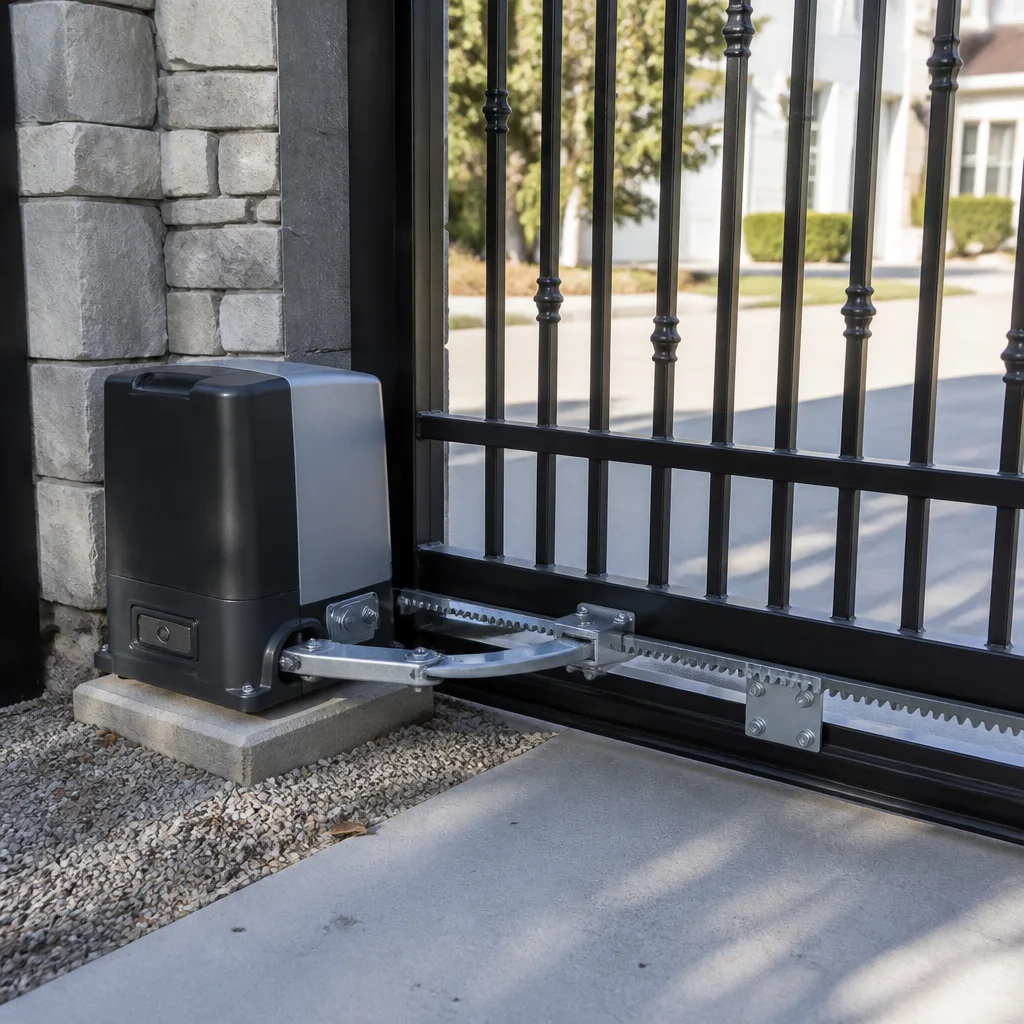
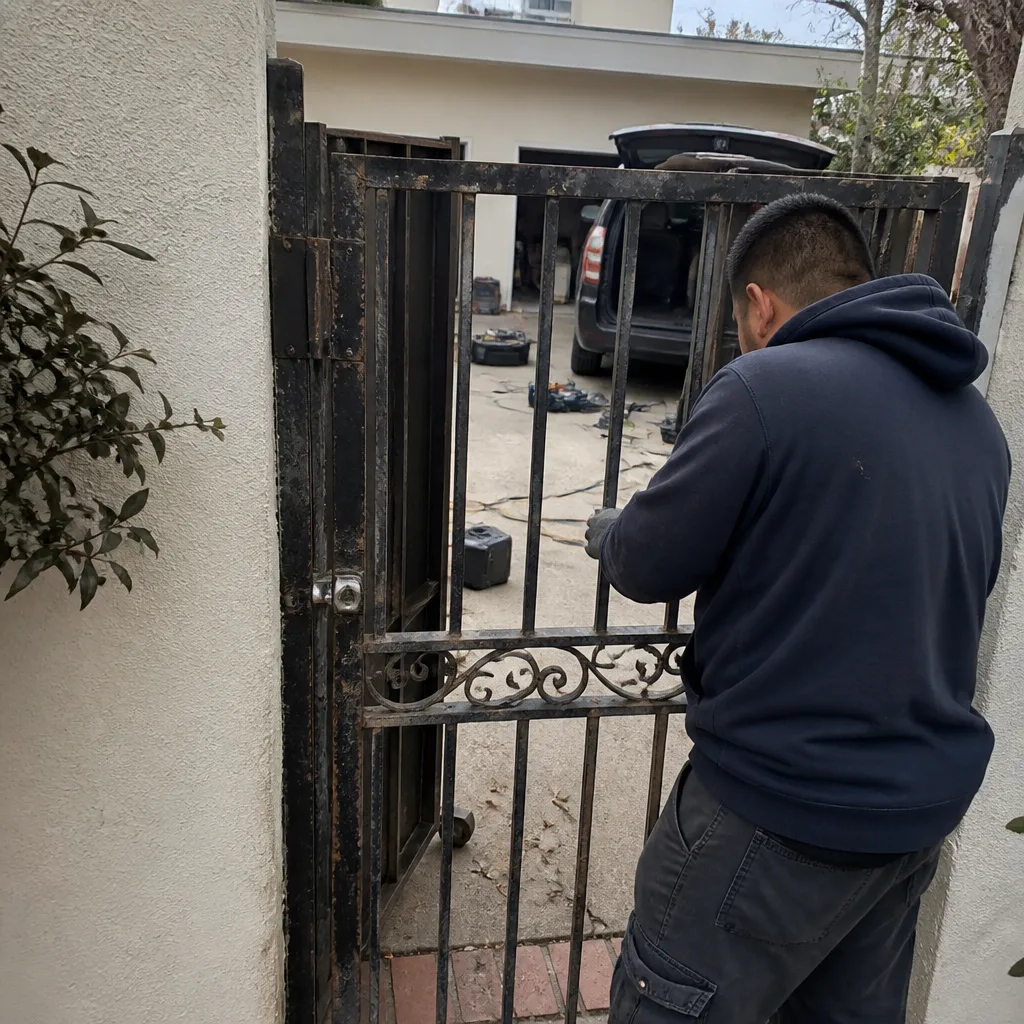 Before
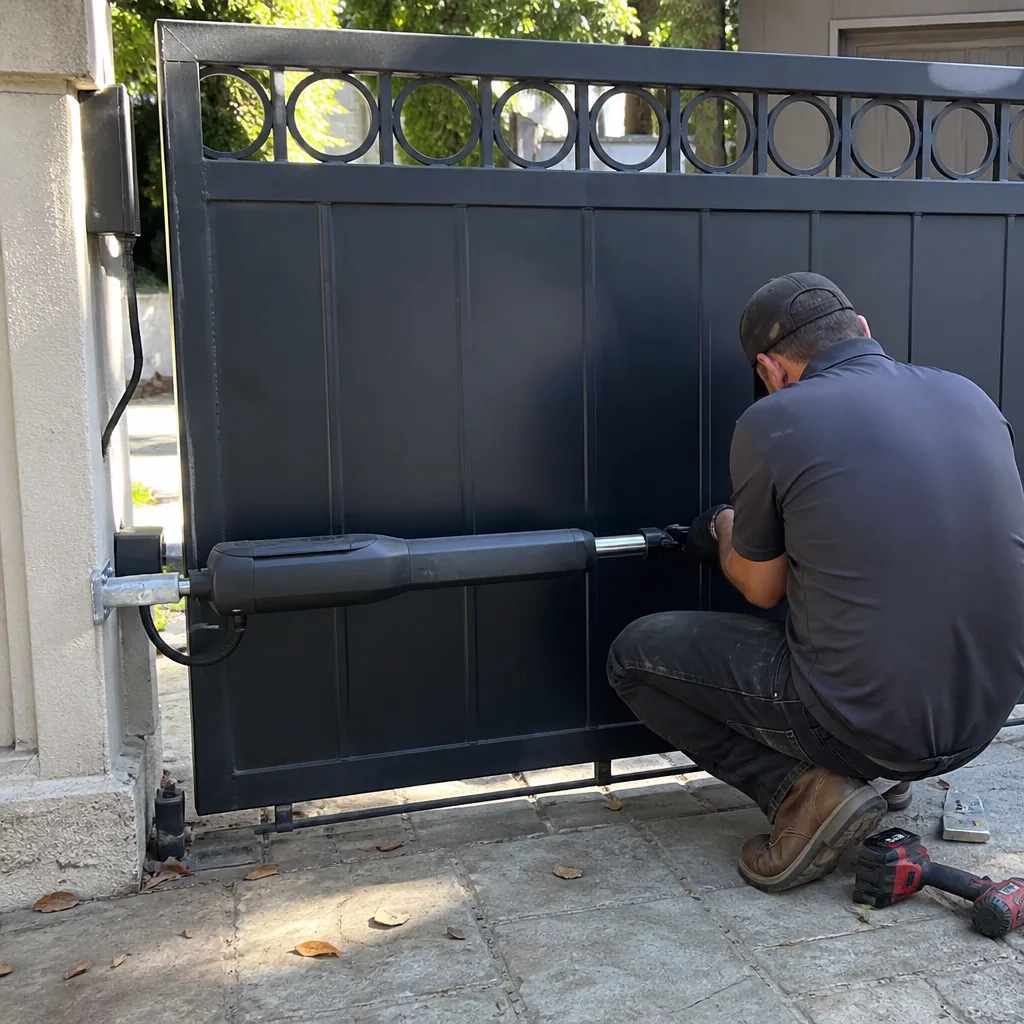 After
After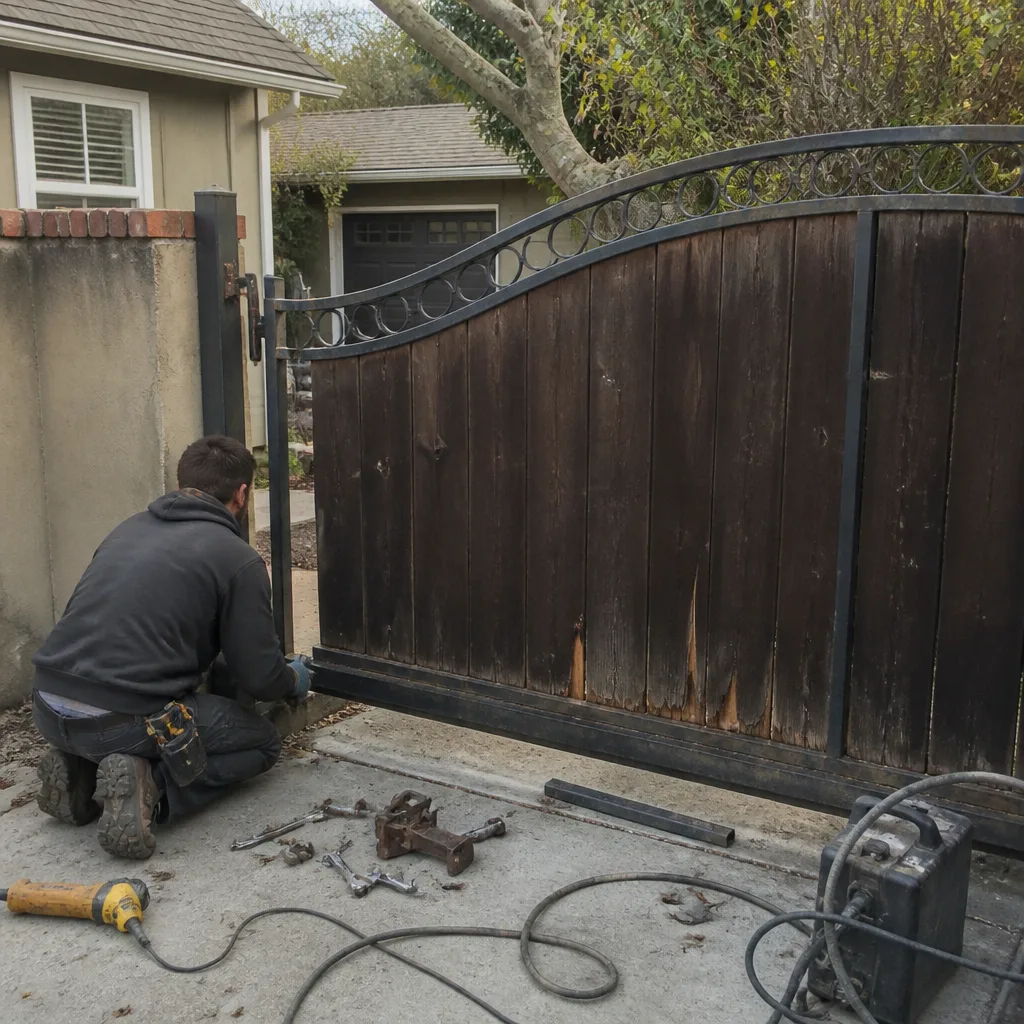 Before
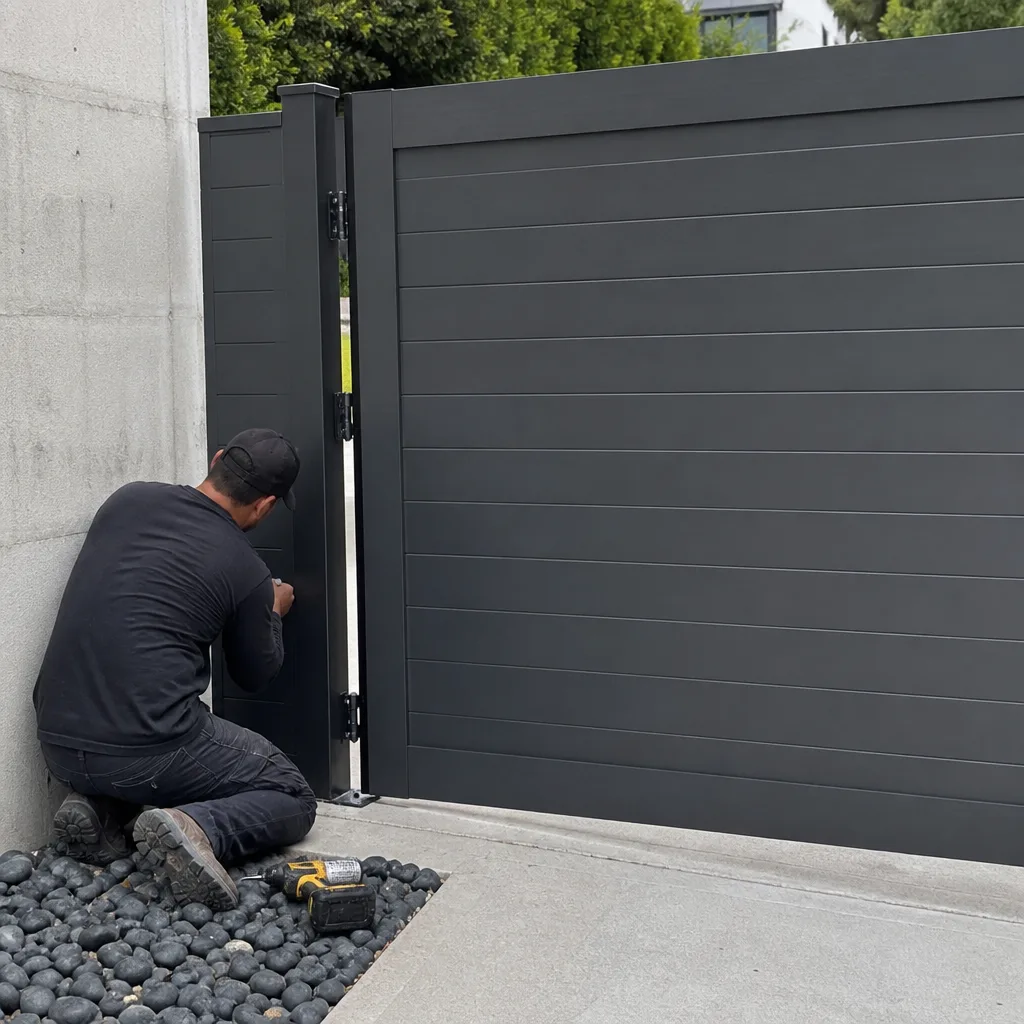 After
After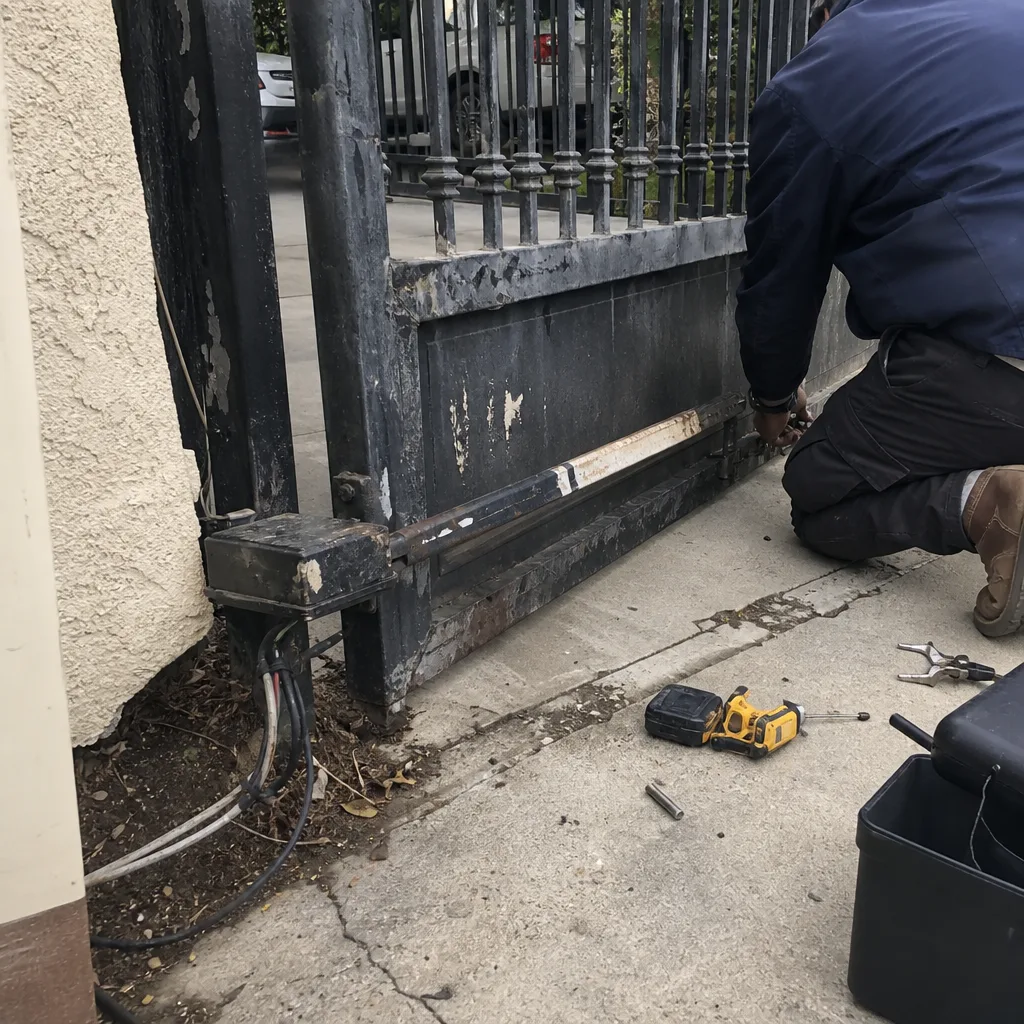 Before
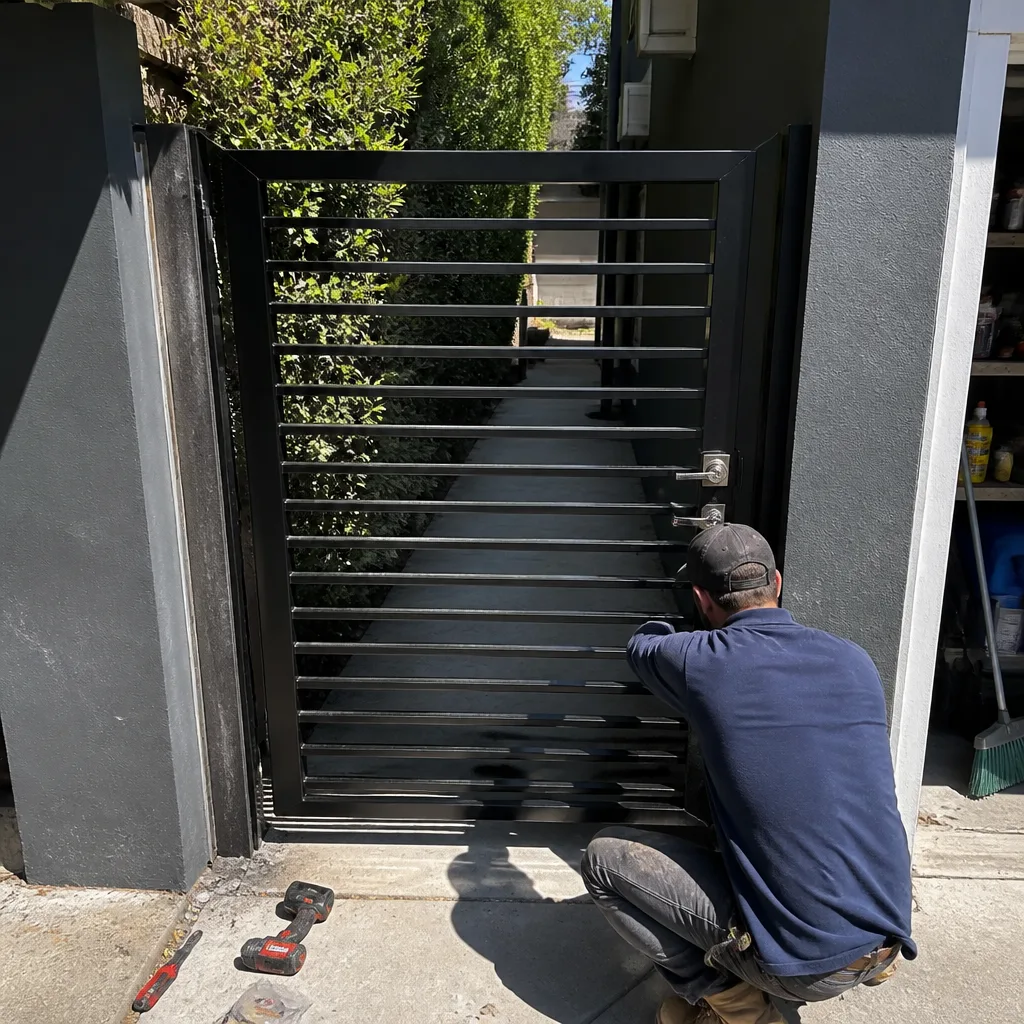 After
AfterGate Repair Permits, Codes & Inspections in CA: What You Need to Know
Here’s what surprises most West Hollywood homeowners: the most dangerous part of a driveway gate isn’t the motor or the chain. It’s the assumption that a “repair” is always just a repair. California’s gate safety code doesn’t care what word you use on the invoice. The moment a new operator touches that post, UL 325 entrapment-protection requirements activate, and a permit-free swap can quietly void your insurance coverage on the exact day you need it most. This guide walks through the actual thresholds, the inspection realities, and the paperwork trail that protects you. We’ll cover what a West Hollywood inspector actually checks, what your HOA can demand beyond the city, and why the difference between maintenance and alteration matters more than most contractors admit.
Quick Answer
Most simple gate repairs in California, such as replacing a hinge, welding a crack, or changing a limit switch, require no permit. However, replacing a gate operator or motor, installing a new gate, or modifying the gate’s structure triggers both building code compliance (UL 325 entrapment protection) and, in many cases, a permit from the City of West Hollywood. When in doubt, the test is straightforward: if the work changes how the gate moves, how it stops, or how it’s powered, assume a permit and an inspection may be required.
Table of Contents
- Maintenance vs. Alteration: Where the Permit Line Actually Sits
- UL 325 Explained: The Federal Safety Standard That Governs Every Gate
- West Hollywood Permit Process: Steps, Thresholds, and What the City Checks
- HOA Gate Modifications: When CC&Rs Are Stricter Than the City
- What Happens During a West Hollywood Gate Inspection
- Unpermitted Work and Insurance: The Liability You Didn’t Know You Were Carrying
- How Operator Brands Handle UL 325 Compliance (FAAC, BFT, Linear, Viking)
- The Documentation Standard: Why Written Records Matter More Than Receipts
 Before
 After
AfterMaintenance vs. Alteration: Where the Permit Line Actually Sits
California’s building code and local municipal codes divide gate work into two buckets, and the line between them is not about cost. It’s about function. Maintenance keeps the gate doing what it already does. Alteration changes what the gate does, how it does it, or what powers it. Most homeowners get this wrong because they assume a “repair” is defined by the price tag. A $400 hinge replacement is maintenance. A $400 operator swap is alteration, even if the operator itself is cheap, because you have changed the safety control system.
Here is the practical breakdown:
- Maintenance (no permit in most cases): Replacing a hinge, greasing the track, tightening a chain, welding a cracked post bracket, replacing a wheel, adjusting a limit switch, replacing a gate wheel or roller, replacing a keypad battery, or rewiring a damaged low-voltage cable using the same path and gauge.
- Alteration (permit often required): Replacing a gate operator or motor, installing a new gate leaf, changing the gate’s swing direction, adding an automatic opener to a manual gate, extending or shortening the gate, changing the gate material from wood to steel, or adding any powered accessories like a maglock, vehicle detector, or solar panel array tied to a new operator.
- New installation (permit always required in West Hollywood): Any new gate, any new operator, any post installation, any electrical run from the panel to the gate, any pedestal or keypad mounting that requires concrete work.
West Hollywood’s municipal code follows the California Building Standards Code (Title 24) and the California Electrical Code, but the city adds its own zoning and design review layers. A driveway gate in a designated historic district or a multi-family property with a homeowners association may face additional approval steps beyond the base permit. Our team has worked on gates in the Norma Triangle and the West Hollywood West neighborhood where the city’s requirement was straightforward, but the HOA’s architectural review committee took an additional thirty days.
The practical rule we give every homeowner: if you are only replacing a part that wears out, no permit. If you are replacing the brain, the muscle, or the skeleton, assume a permit. And if a contractor tells you a new operator is “just a repair, no permit needed,” ask them to put that statement in writing-our How to Hire a Gate Repair Contractor in West Hollywood: A Step-by-Step Guide explains why this matters. Most won’t, because they know it’s not defensible.
UL 325 Explained: The Federal Safety Standard That Governs Every Gate
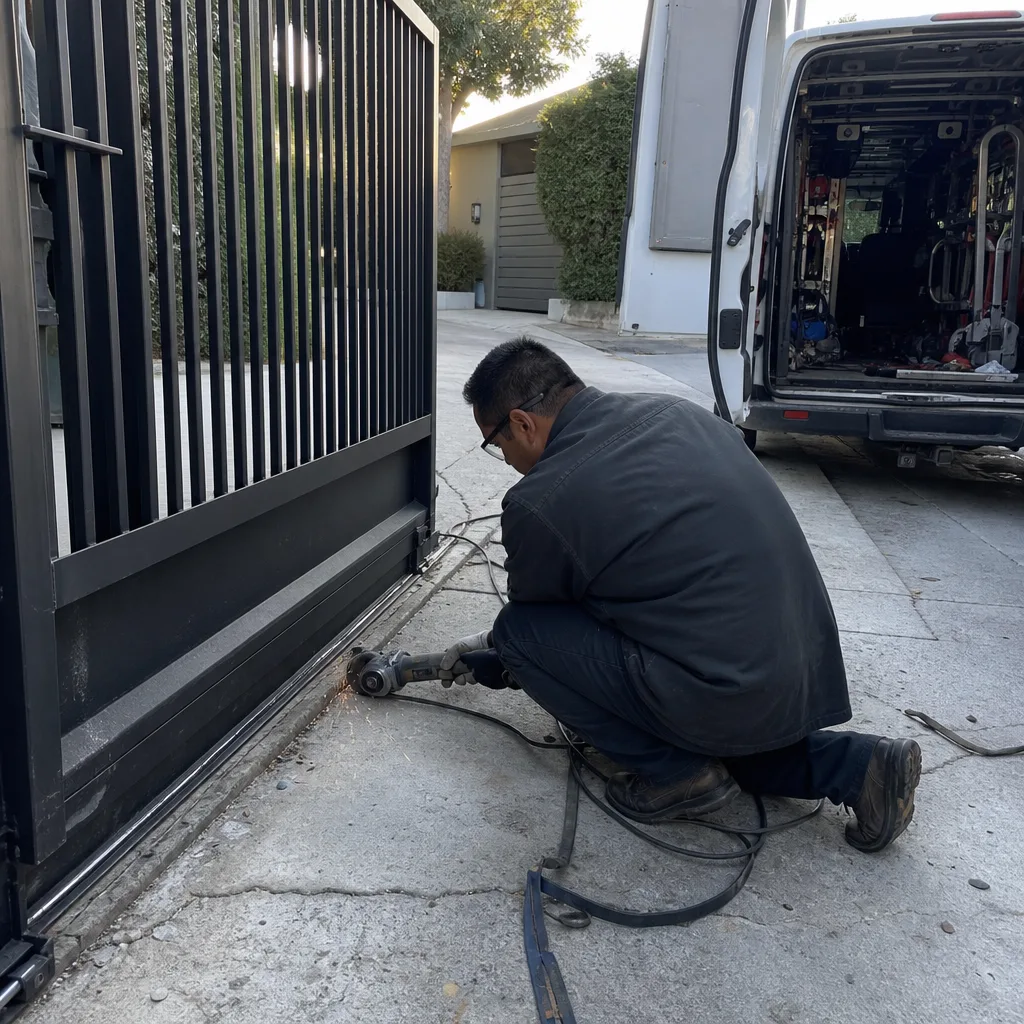
UL 325 is the standard that governs automatic gate operators in the United States. It was written by Underwriters Laboratories, and since 2000, it has been incorporated into the California Electrical Code by reference. The standard’s central concern is entrapment: a gate moving under power must not crush, shear, or trap a person, pet, or vehicle. Every automatic gate operator installed in California must be listed to UL 325, and every installation must include the entrapment-protection devices the standard requires for that operator’s class and application.
The standard distinguishes gate classes:
- Class I: Residential, one to four family dwellings. The gate cycles infrequently and is used by people familiar with it.
- Class II: Commercial or multi-family. The gate cycles more often and may be used by people unfamiliar with its operation.
- Class III: Industrial or limited-access, such as a loading dock or airport perimeter.
- Class IV: Restricted access, such as a prison or military installation.
Most West Hollywood driveway gates are Class I. But the safety requirements are not optional just because the gate is residential. The standard requires at least two independent entrapment-protection devices for a typical swing gate. For a sliding gate, the requirements differ based on the direction of travel and the accessible pinch points.
Here is the plain-language version of what UL 325 demands for a typical residential swing gate operator:
- Inherent entrapment protection: The operator must sense resistance, such as a built-in current-sensing circuit that reverses the gate when it meets an obstruction. This is built into most modern operators, including FAAC, BFT, Linear, and Viking residential models.
- External entrapment protection: A photo-eye or contact edge must be installed. A photo-eye is an infrared beam that, when broken, tells the gate to stop or reverse. A contact edge is a pressure-sensitive strip mounted on the leading edge of the gate that reverses the gate when it touches something.
- Warning signage: The installer must mount a UL-compliant warning placard on both sides of the gate, visible from each approach.
- Gate travel limits: The operator must be set to stop at the proper open and closed positions, with no more than the manufacturer’s specified travel. A mis-set limit switch, which is common on older BFT and Linear units, can create a gap that catches a hand or a child’s arm.
What most homeowners don’t realize is that UL 325 compliance is not a one-time event. It is a condition that must be verified any time the operator is replaced or the gate’s geometry changes. A gate that was compliant in 2014 may not be compliant in 2025 if the operator has been changed and the photo-eye placement was never re-verified. In our experience in West Hollywood, roughly one in four older operators we service is missing at least one required entrapment-protection device, and the homeowner had no idea.
West Hollywood Permit Process: Steps, Thresholds, and What the City Checks
The City of West Hollywood issues permits through its Building and Safety Division. The process for a gate project is not complicated, but it is procedural, and skipping steps will cost you more time than following them. Here is the sequence we walk every client through:
- Determine scope: Is this a repair, an alteration, or a new installation? If alteration or installation, continue.
- Prepare documentation: You will need a site plan showing the gate location, the property lines, and the setback from the street or alley. You will also need the operator’s UL 325 listing documentation, the electrical plan if a new circuit is being run, and in some cases, a structural calculation for the gate and posts.
- Submit the application: The city accepts applications online through its permit portal. The fee is based on the project valuation, which is the total cost including labor and materials, not just the parts.
- Plan check: A plan reviewer will verify that the gate complies with zoning requirements, including setback from the right-of-way, height limits, and any design review requirements in overlay zones.
- Permit issuance: Once approved, the city issues a permit with a specific inspection schedule. You or your contractor must post the permit on site.
- Rough inspection: If electrical work is involved, the city will inspect the wiring before it is concealed. This includes the conduit, the gauge, the grounding, and the disconnect.
- Final inspection: The inspector verifies the gate’s operation, the entrapment-protection devices, the signage, and the overall condition of the installation.
Dollar thresholds in West Hollywood matter less than scope thresholds. A $2,000 hinge replacement is still maintenance, and a $500 operator swap is still an alteration. The city’s concern is not the price, it is the change in the gate’s controlled function. That said, the city does use valuation to determine the permit fee, and the fee is not insignificant. Expect to pay several hundred dollars for a typical gate operator replacement permit, plus any plan check fees if required.
West Hollywood’s inspection scheduling runs on a next-day or two-day window for most residential work. The city is efficient, but it will not schedule a final inspection until all prior inspections are passed and the permit is properly posted. We have seen homeowners lose a week because the permit was in a drawer instead of a ziplock bag stapled to the gate post.
HOA Gate Modifications: When CC&Rs Are Stricter Than the City
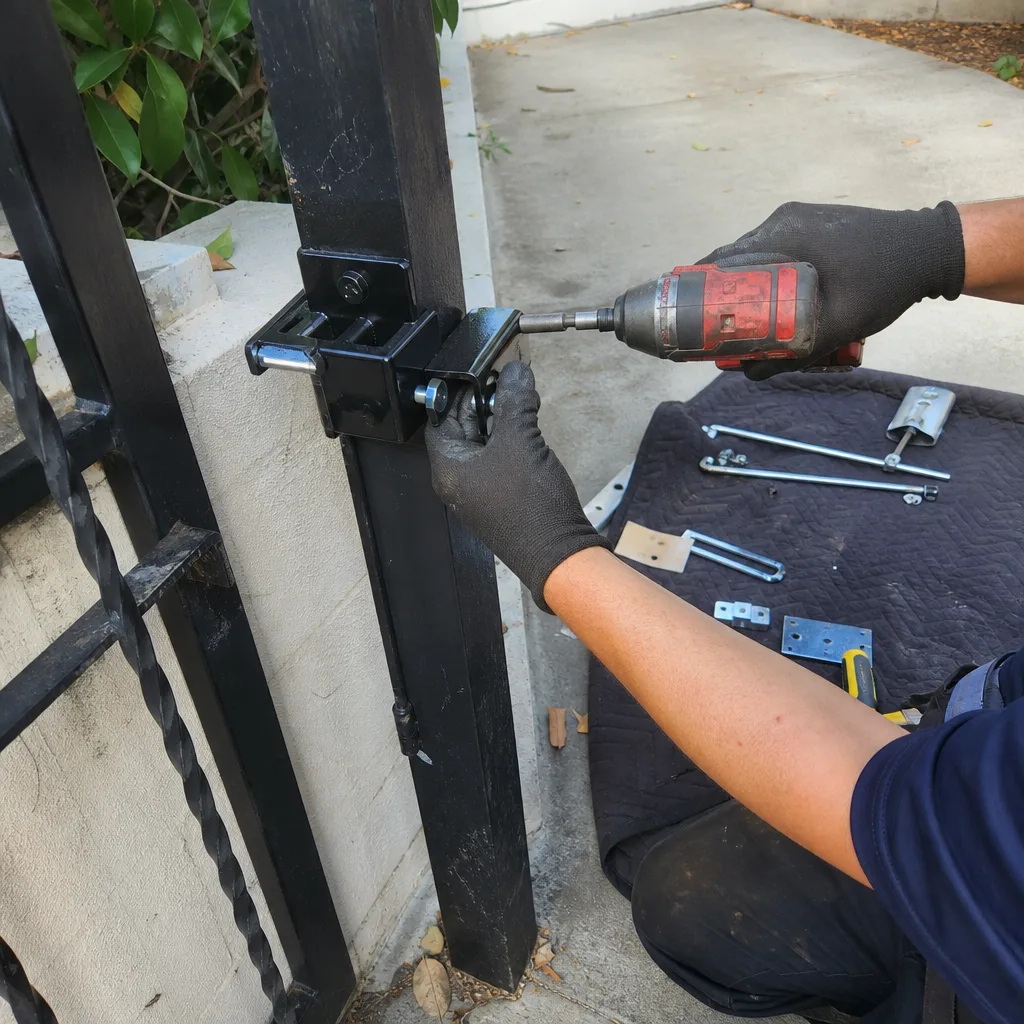
If you live in a West Hollywood community governed by a homeowners association, your CC&Rs may impose requirements that go beyond the city’s permit process. This is the part most general guides miss, and it’s the part that causes the most friction. The city cares about safety. The HOA cares about aesthetics, uniformity, and property values. The two are not the same, and both must be satisfied.
Common HOA requirements for gate work:
- Architectural review: Many West Hollywood HOAs require an architectural review committee to approve any change to the gate’s appearance, including material, color, height, and style. A replacement gate that is identical in appearance may still need a review, because the committee wants to confirm it is in fact identical.
- Approved contractor list: Some HOAs maintain a list of approved contractors, and the gate company must be on that list before work begins. This is more common in gated communities and multi-family properties than in single-family neighborhoods.
- Insurance certificates: The HOA may require the contractor to name the HOA as an additional insured on a certificate of insurance before any work starts. This is standard practice and should not be a problem for any legitimate gate company.
- Noise and color restrictions: Some HOAs restrict operator noise levels or the color of the gate and posts. A bright red gate that looks great in the design magazine may be a violation on day one.
- Time-of-day restrictions: Construction hours in West Hollywood HOAs often run narrower than the city’s noise ordinance. A gate replacement may only be allowed between 9:00 a.m. and 5:00 p.m. on weekdays, with no weekend work.
Here is the sequence that works: check your CC&Rs first, before you call a gate company. Find the section on exterior modifications and architectural review. If it requires HOA approval, start that process before the city permit, because the HOA’s timeline is often the longest pole in the tent. We have seen HOAs take 45 days to review a gate replacement that the city approved in one week. Starting the HOA process late means the gate sits uninstalled or in limbo while the approval crawls through committee.
One more point specific to West Hollywood: some older condo and townhome complexes in the city have CC&Rs written before UL 325 was adopted. Those documents may not mention entrapment protection at all. In that case, the newer safety standard governs, and the HOA cannot waive it. The city will enforce UL 325 even if the HOA’s documents are silent on the issue.
What Happens During a West Hollywood Gate Inspection
West Hollywood’s building inspectors are not gate specialists. They are generalists who inspect a wide range of residential work. That means the gate inspection is often quick, but it is specific. The inspector is working from a checklist, and here is what that checklist contains in practice:
- UL 325 listing: The inspector will look for the operator’s certification label, which confirms the unit is listed to UL 325. If the label is missing, painted over, or obscured by the mounting bracket, the inspection fails. We photograph the label before the inspection so the inspector can see it without removing the operator cover.
- Entrapment protection devices: The inspector will test the photo-eye or contact edge. For a photo-eye, the inspector will break the beam and confirm the gate stops or reverses. For a contact edge, the inspector may press on the edge to verify it triggers.
- Gate travel and force: The inspector will watch the gate run through a full cycle. The gate must stop at the proper positions, and the operator’s force setting must be low enough that the gate reverses under light pressure but high enough to move the gate reliably. A gate that shudders or stalls during travel will draw attention.
- Warning signage: The inspector will check for the required warning placards on both sides of the gate. Missing signage is the single most common failure we see on older gates that were never inspected.
- Electrical work: If a new circuit was run, the inspector will check the conduit, the grounding, the disconnect, and the wire gauge. This is the same inspection any electrical work would receive, but the gate’s location outdoors means the inspector may also check for weatherproofing of all connections and enclosures.
- Fire access: In West Hollywood, the fire department has reviewed the gate location. A driveway gate that blocks emergency vehicle access may require a key switch, a siren-activated sensor (the “Yelp” system), or a Knox box. The inspector will verify any required fire access devices are installed and functional.
The inspection itself usually takes fifteen to thirty minutes. What fails most often is not the operator. It is the peripheral items: missing signage, a photo-eye that was mounted too high or too low, a force setting that is too aggressive, or a fire access device that was never installed because the original permit did not require it but the current code does. We have seen a $5,000 gate replacement fail final inspection over a $12 warning placard that was still in the box in the garage.
Unpermitted Work and Insurance: The Liability You Didn’t Know You Were Carrying
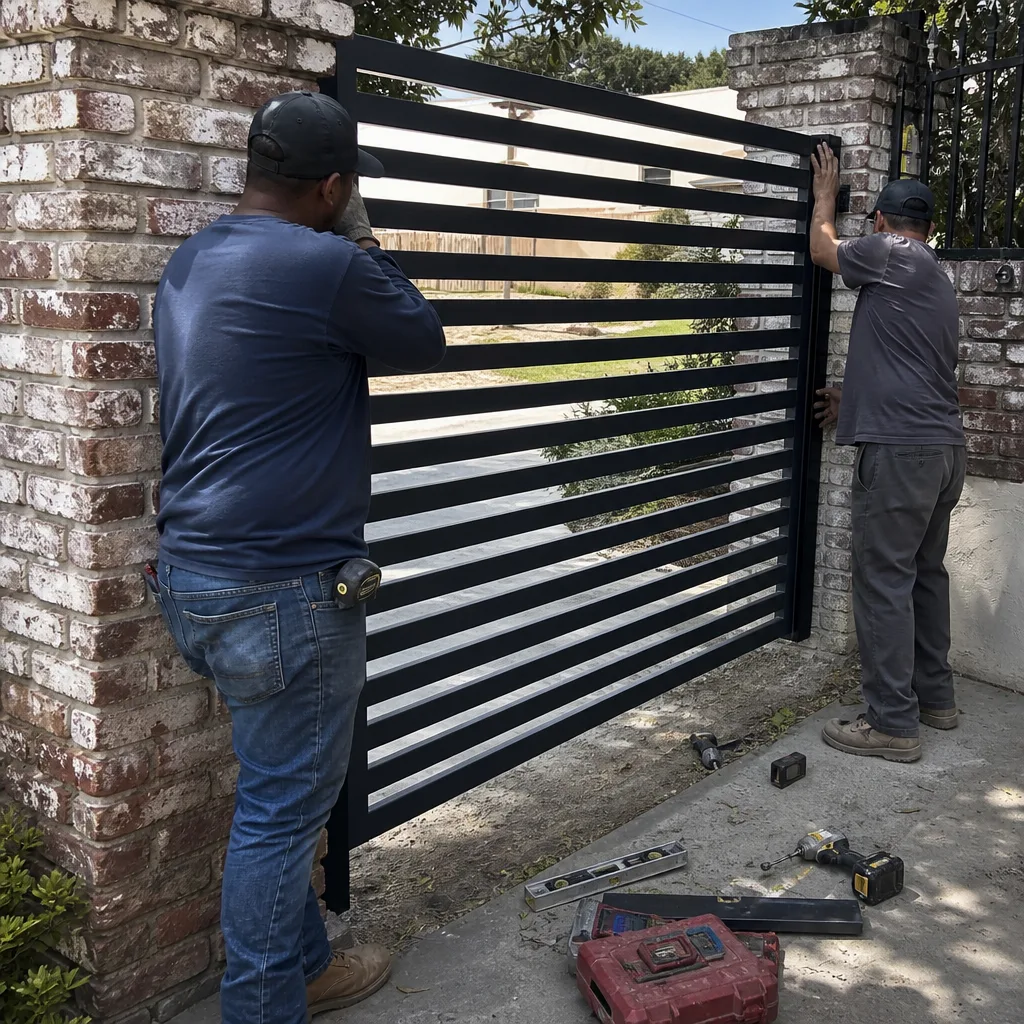
Here is the scenario that keeps insurance adjusters employed. A gate is installed without a permit. Five years later, the gate’s operator fails to reverse in time and a visitor is injured. The insurance company investigates, finds the unpermitted installation, and denies the claim on the grounds that the policyholder violated the terms of the policy by performing unpermitted work that resulted in a loss. The homeowner is now personally liable for the medical bills, the legal defense, and any judgment.
This is not a hypothetical. California insurance policies routinely exclude or limit coverage for losses arising from unpermitted construction. The standard ISO homeowners policy, which most carriers use as a base, contains language that excludes coverage for “loss or damage caused by the unauthorized entry, unauthorized use, or unauthorized occupancy of the insured premises.” More importantly, every policy has a provision that coverage is conditional on the insured complying with all laws and regulations. An unpermitted gate alteration is a violation of the California Building Code and the local municipal code, and that violation can become the insurer’s basis for denial.
The liability flows both ways. If your unpermitted gate is installed by a contractor who then disappears, and the gate later fails, the contractor’s insurance may also deny coverage because the work was never permitted. That leaves you, the homeowner, holding the entire liability. The contractor’s handshake doesn’t pay a settlement.
What we tell every West Hollywood client is simple: the permit is not a tax. It is an insurance policy that your insurance company recognizes. A permitted installation has a paper trail: the permit, the inspection record, the final approval. That trail is what the insurance adjuster looks for when a claim comes in. Without it, you are asking the adjuster to take your word that the gate was safe. Adjusters don’t get paid to take your word.
The practical takeaway: if you are buying a home in West Hollywood with an existing automatic gate, check whether the gate and operator were permitted. The city keeps permit records by address, and a title search or a call to Building and Safety can confirm what was permitted and when. If the gate was clearly altered after the last permit, budget for a code-compliance inspection before you close.
How Operator Brands Handle UL 325 Compliance (FAAC, BFT, Linear, Viking)
Not all gate operators are created equal when it comes to UL 325 compliance and the documentation that an inspector wants to see. Here is what we have learned servicing nine major automation brands in West Hollywood, including the four most common on residential driveways here:
FAAC: FAAC operators, particularly the residential swing-arm models, are common on West Hollywood homes because they are compact and quiet. FAAC’s documentation is excellent: every unit ships with a UL 325 compliance sheet and a clear wiring diagram. The most common compliance issue we find with FAAC installations is a photo-eye that was never installed because the original installer treated it as optional. It is not optional. FAAC’s residential swing-arm operators require external entrapment protection, and the inspector will ask.
BFT: BFT is an Italian brand that’s popular in multi-family and light-commercial settings, but we see the residential models on higher-end single-family homes in West Hollywood. BFT operators have built-in current-sensing entrapment protection, but the force setting must be configured correctly during installation. A BFT unit set to maximum force will move a heavy gate easily, but it will also keep pushing when it shouldn’t. The inspector in West Hollywood has seen enough BFT installations to check the force setting, not just the presence of a photo-eye.
Linear: Linear is one of the most common residential operator brands in Southern California, and the older Linear units are where we see the most UL 325 compliance problems. Many older Linear operators were installed before the current entrapment-protection requirements were enforced, and the installations were never updated. A homeowner who replaces an old Linear with a new one may be surprised to find that the new unit requires a photo-eye and a warning placard that the old unit never had. The permit process catches this.
Viking: Viking makes heavy-duty swing and slide gate operators, and we see them on larger West Hollywood properties with wide or steep driveways. Viking’s compliance documentation is thorough, but the hardware is physically larger and the wiring requirements are more demanding. A Viking installation that works perfectly on day one can fail a final inspection if the wire gauge is undersized or the conduit is not weatherproofed. The inspector will check those details, not just the gate’s operation.
The common thread across all four brands: UL 325 compliance is a property of the installation, not the operator. The operator is listed to UL 325. The installation must be verified to UL 325. The difference is everything.
The Documentation Standard: Why Written Records Matter More Than Receipts
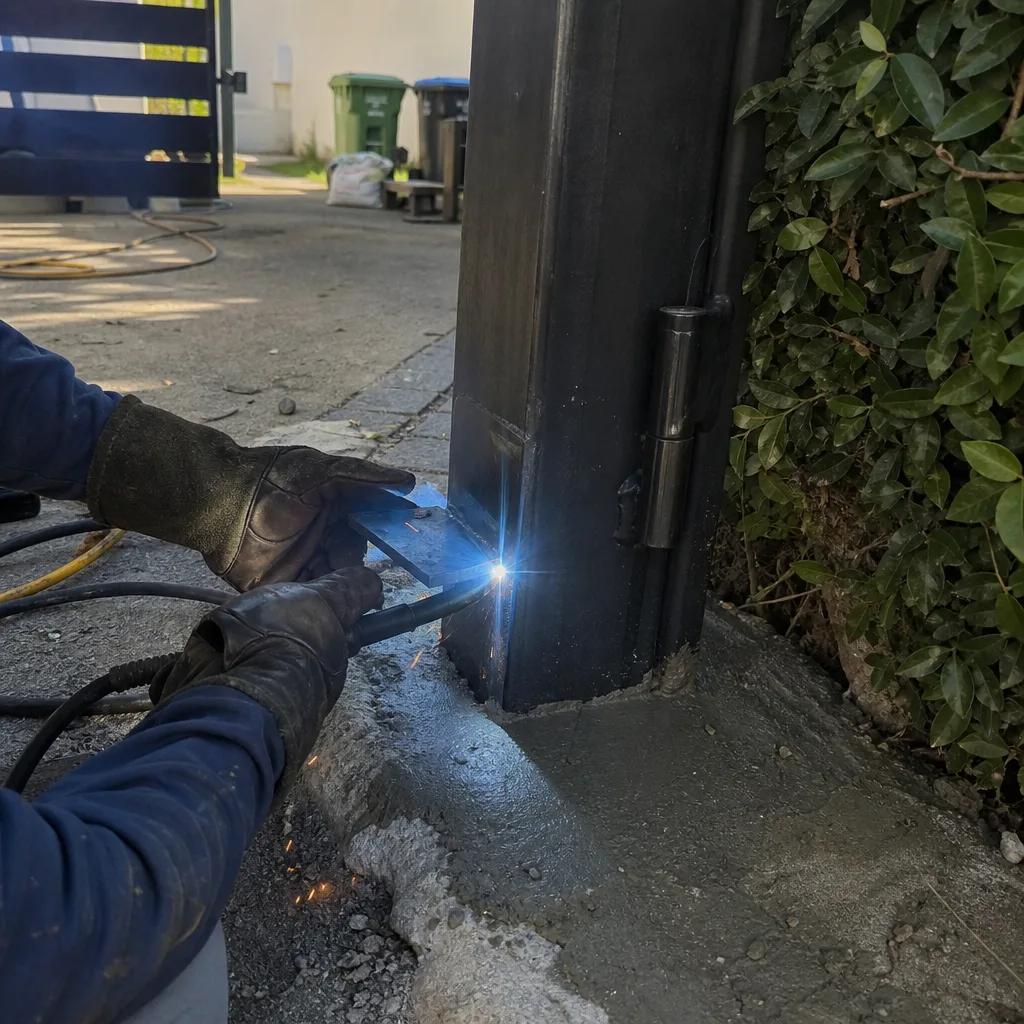
Most gate companies hand you a receipt and drive away. That receipt tells you what you paid. It doesn’t tell you what was installed, how it was set, where the photo-eye was mounted, or whether the force setting was changed. If you sell your home, file an insurance claim, or call a different company for a future repair, that receipt is nearly worthless.
Vance Gate Repair operates under a different standard, and it’s the standard we’ve used since Adrian Vance started the company in 2014 out of commercial access-control work. On a commercial access-control site, you don’t guess. You document. You photograph the wiring. You record the limit-switch positions. You leave a record that the next technician can read without opening a single panel. That habit carried over into every residential driveway gate we touch.
Here is what a proper gate documentation package looks like:
- Written scope of work: A plain-English description of what was found, what was done, and what was left behind. Not a receipt. A record.
- Photographic evidence: Photos of the operator before and after, the wiring connections, the photo-eye placement, the limit-switch settings, and the final gate position. Every photo is dated and tied to the job address.
- Part numbers and serial numbers: The exact operator model, the photo-eye model, the contact edge model. If a future technician needs to order a replacement part, the number is already in the file.
- Settings record: The force setting, the travel limits, the autoclose timer, the warning placard locations. If someone changes a setting later, there’s a baseline to return to.
- Permit and inspection status: If a permit was pulled, the permit number and the inspection results. If no permit was required, a written statement explaining why the work fell under maintenance.
Under the Haven Standard, which governs every Vance job, Clause 1 requires that the price be written and handed over before any work starts. Clause 4 requires a documented photo record on every visit. No exceptions. No verbal estimates. No disappearing paperwork. The documentation is not an upsell; it is the product. A gate that is repaired correctly and documented completely is a gate that can be serviced, sold, and insured without mystery.
For homeowners in West Hollywood, the documentation matters in exactly one moment: when something goes wrong and someone asks, “Can you prove the gate was installed correctly?” If the answer is a receipt in a drawer, you are already behind. If the answer is a file with photos, settings, and a permit, you are finished. That is the entire difference. For more guides & resources on protecting your property, see our blog.
Common Mistakes to Avoid
- Treating operator replacement as maintenance. A new operator changes the gate’s safety control system and triggers UL 325 verification. Calling it a repair on the invoice doesn’t change what it is under the code.
- Skipping the permit to save a few hundred dollars. The permit fee is cheap compared to a denied insurance claim or a liability judgment. The permit is the cheapest insurance you will ever buy.
- Ignoring HOA requirements until after the city approves. The HOA’s timeline is often longer than the city’s. Start the HOA process first, not last.
- Assuming the old photo-eye is still compliant. If the operator is being replaced, the entrapment protection devices must be re-verified at the new operator’s settings. An old photo-eye mounted for an old operator may be in the wrong position for the new one.
- Buying a home with an unpermitted gate and no inspection. The seller’s word that “the gate is fine” is not documentation. Pull the permit history before you close.
- Not photographing the final installation. If you ever sell the home or file a claim, photos of the final installation are the fastest way to answer the adjuster’s questions. A receipt is not enough.
- Hiring a contractor who won’t put the scope in writing. A verbal estimate is not a scope. If a contractor won’t write down what they’re going to do, they’re not protecting you; they’re protecting themselves.
When to Call a Professional
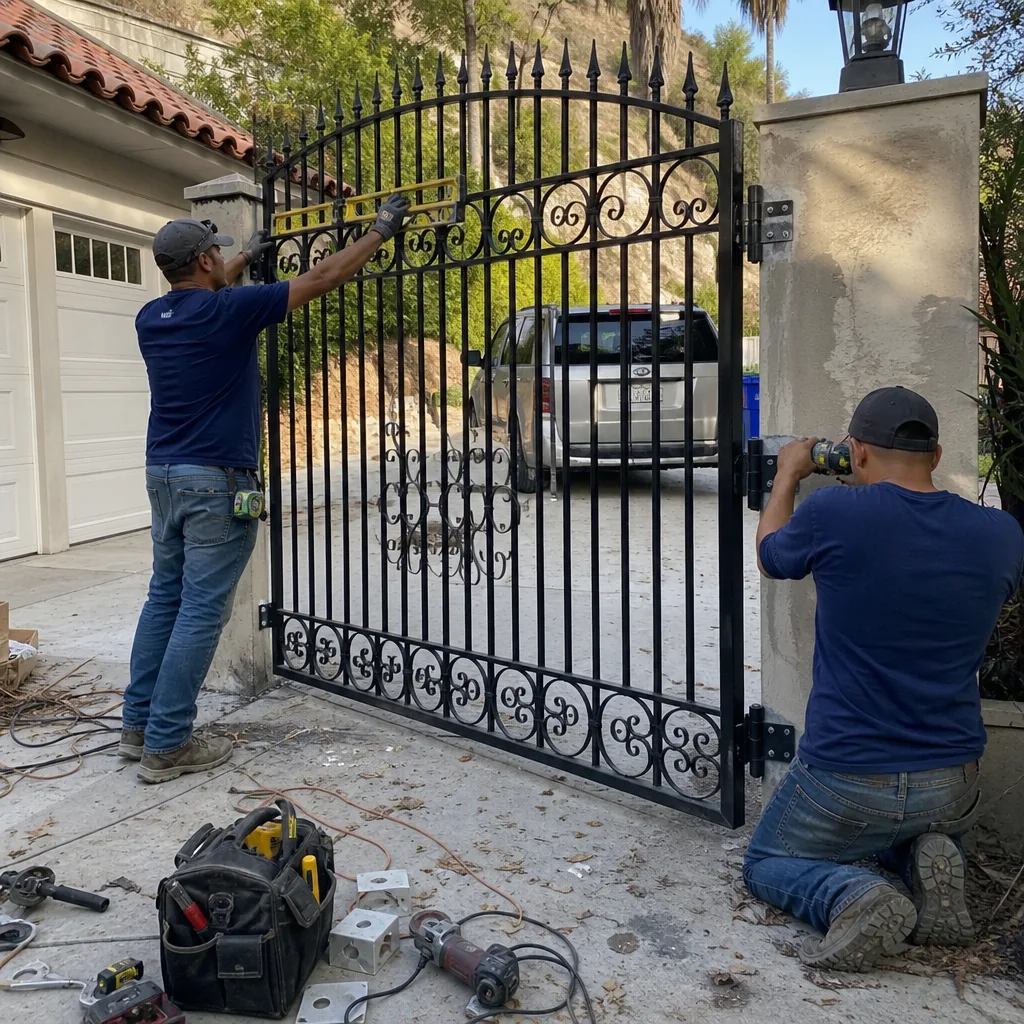
Call a gate professional when the work involves the operator, the wiring, the concrete work, or anything that changes how the gate moves. Hinge replacement and surface welding are often maintenance, but the moment you touch the motor, the photo-eye, the limit switch, the force setting, or the electrical feed, you are in code-compliance territory, and a mistake is not a cosmetic problem. It is a liability. If your gate is older than a decade, the entrapment protection may be missing entirely, even if the gate has been working fine. An inspection by someone who knows UL 325 and the West Hollywood permit process will tell you exactly where you stand. Vance Gate Repair West Hollywood offers free estimates in West Hollywood, with a written scope and a written price before any work starts. Call (424) 321-7416.
Frequently Asked Questions
Most simple repairs, such as hinge replacement, welding a crack, or tightening a chain, do not require a permit. However, replacing a gate operator, installing a new gate, or changing the gate’s structure or power supply is considered an alteration or new installation, and a permit is required in West Hollywood under the California Building Code. If the work changes how the gate moves or what powers it, plan on a permit.
UL 325 is the federal safety standard for automatic gate operators, incorporated into the California Electrical Code, that requires entrapment protection such as photo-eyes, contact edges, and inherent current-sensing reversal. It matters because a gate that doesn’t meet UL 325 can injure someone and can also void your insurance coverage. Every operator installed in California must be listed to UL 325 and installed with the required entrapment-protection devices.
No. Replacing a gate opener or motor changes the gate’s safety control system and requires a permit from the City of West Hollywood, along with a UL 325 compliance verification and a final inspection. A contractor who tells you a new operator is “just a repair, no permit needed” is giving you advice that can come back on you in an insurance claim.
A West Hollywood gate inspection checks the operator’s UL 325 listing, the entrapment-protection devices (photo-eye or contact edge), the gate travel and force settings, the warning signage on both sides, the electrical work, and any required fire access devices. The most common failure is missing or improperly mounted entrapment protection, not the operator itself.
It depends on your CC&Rs. Many West Hollywood HOAs require architectural review for any change to the gate’s appearance, even if the city permit process does not. Some HOAs also require approved contractor lists, insurance certificates naming the HOA, and time-of-day work restrictions. Check your CC&Rs before starting any gate project, because the HOA timeline is often longer than the city’s.
Your homeowners insurance may deny the claim on the grounds that the unpermitted work violated the policy’s condition that the insured comply with all laws and regulations. You could be left personally liable for medical bills and legal costs. The permit is not a tax; it is the paper trail your insurance company looks for when a claim comes in.
For questions about your specific gate, your permit status, or your UL 325 compliance, call (424) 321-7416. We’ll tell you what we find, in writing, before any work starts.
The Bottom Line
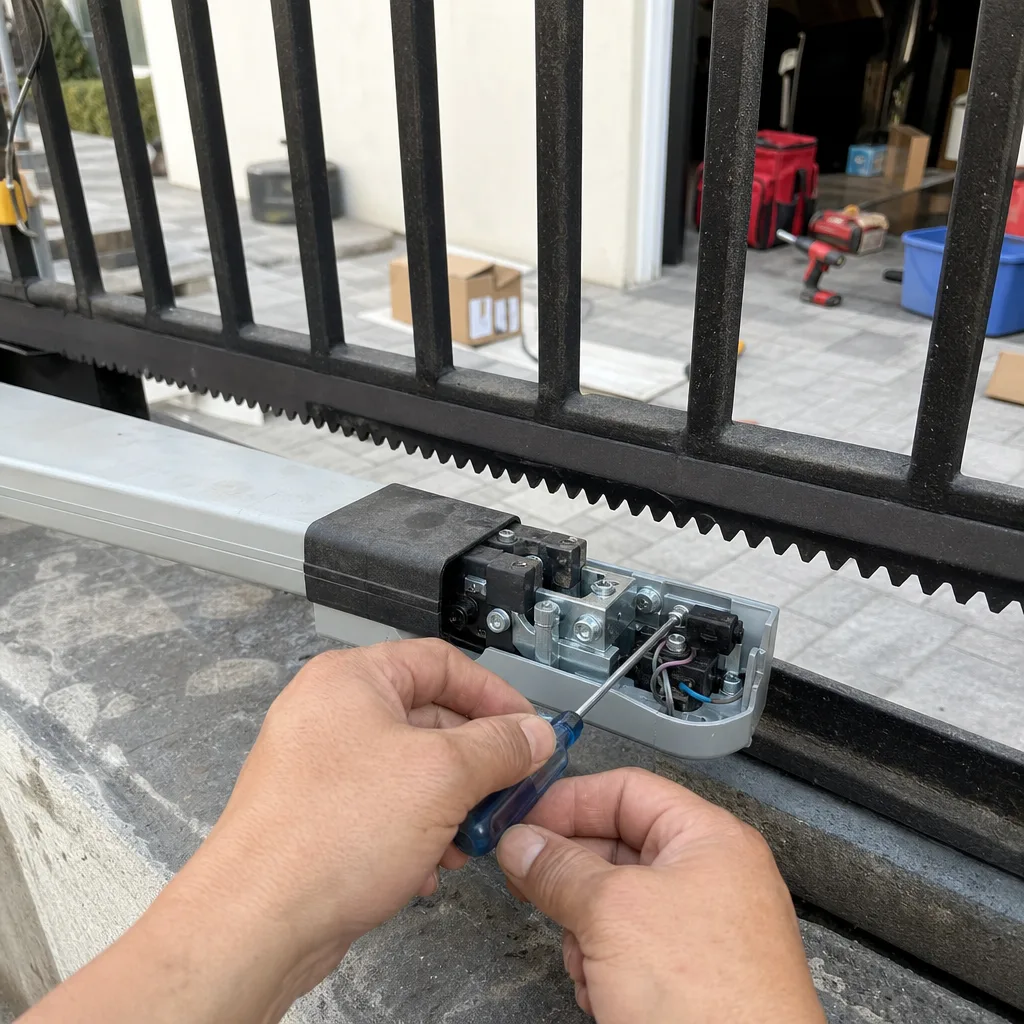
California’s gate code doesn’t care what you call the work. It cares what changed. Simple repairs stay simple: no permit, no inspection, no problem. But the moment a new operator goes on the post, UL 325 entrapment protection activates, and a permit from the City of West Hollywood is the paper that keeps your insurance company on your side. HOAs can add another layer, and unpermitted work can erase your coverage exactly when you need it. The whole system comes down to one habit: write it down, photograph it, and keep the record. That’s what Gate Repair in West Hollywood should include on every visit, and it’s the difference between a gate that’s fixed and a gate that’s defensible.
Written by Adrian Vance, Owner at Vance Gate Repair West Hollywood, serving West Hollywood since 2014.