
Last updated September 20, 2026
Free on-site gate assessment - hinges, posts, and your LiftMaster or Nice gate operator checked before anything is quoted
The assessment is free and the quote is the invoice.
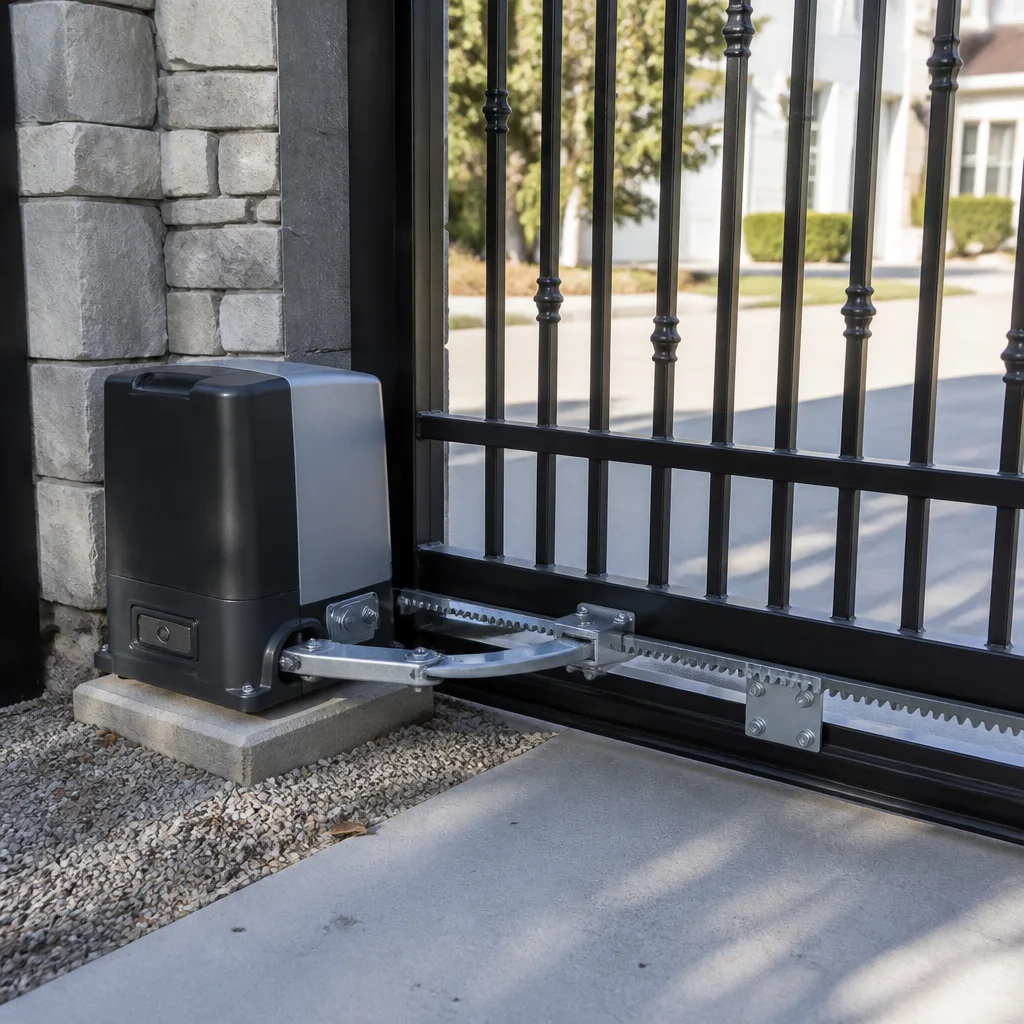
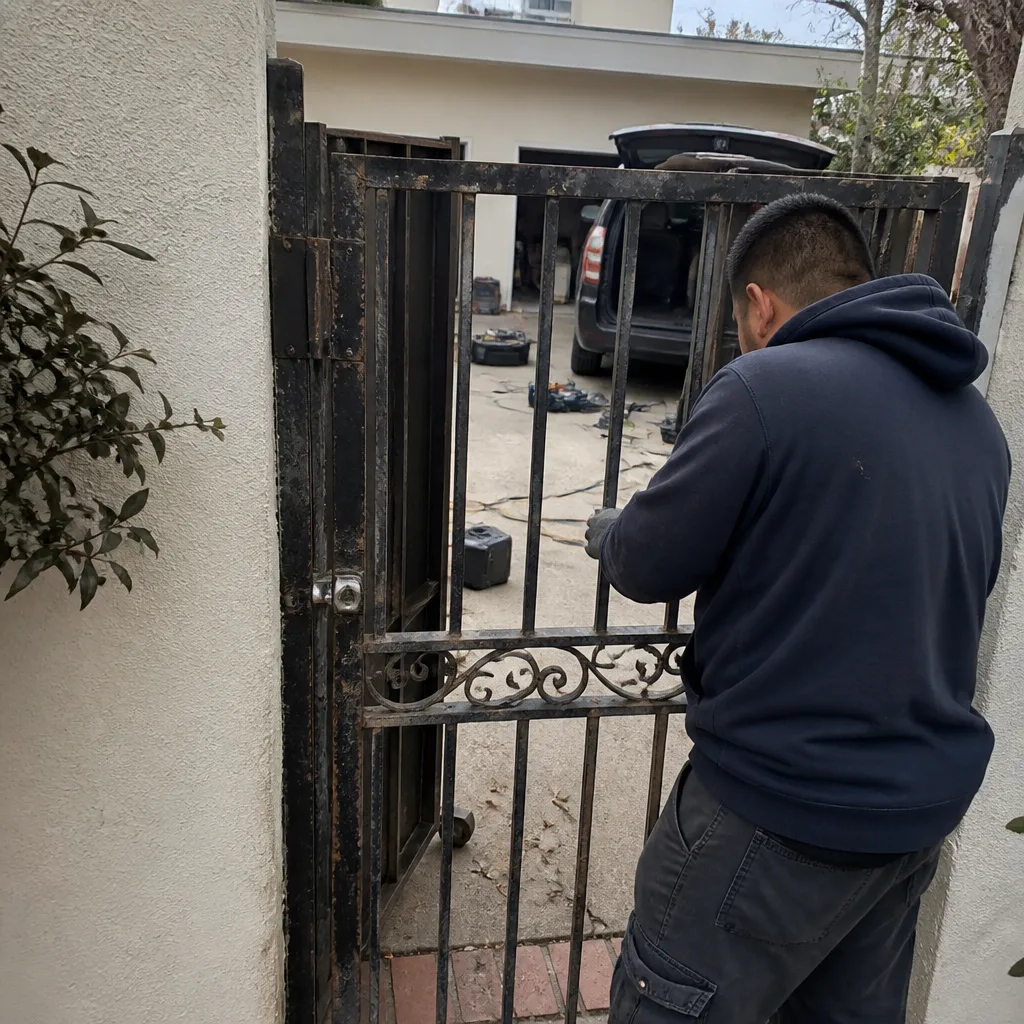 Before
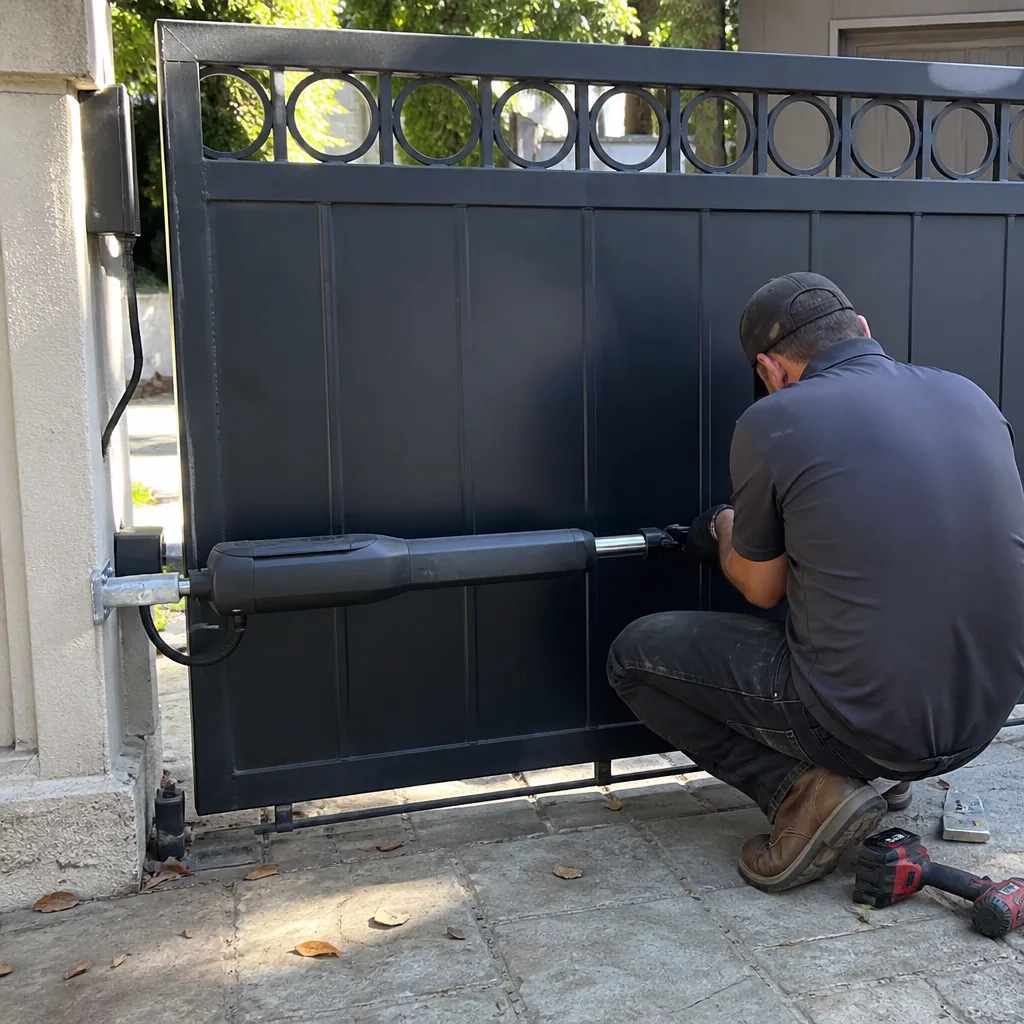 After
After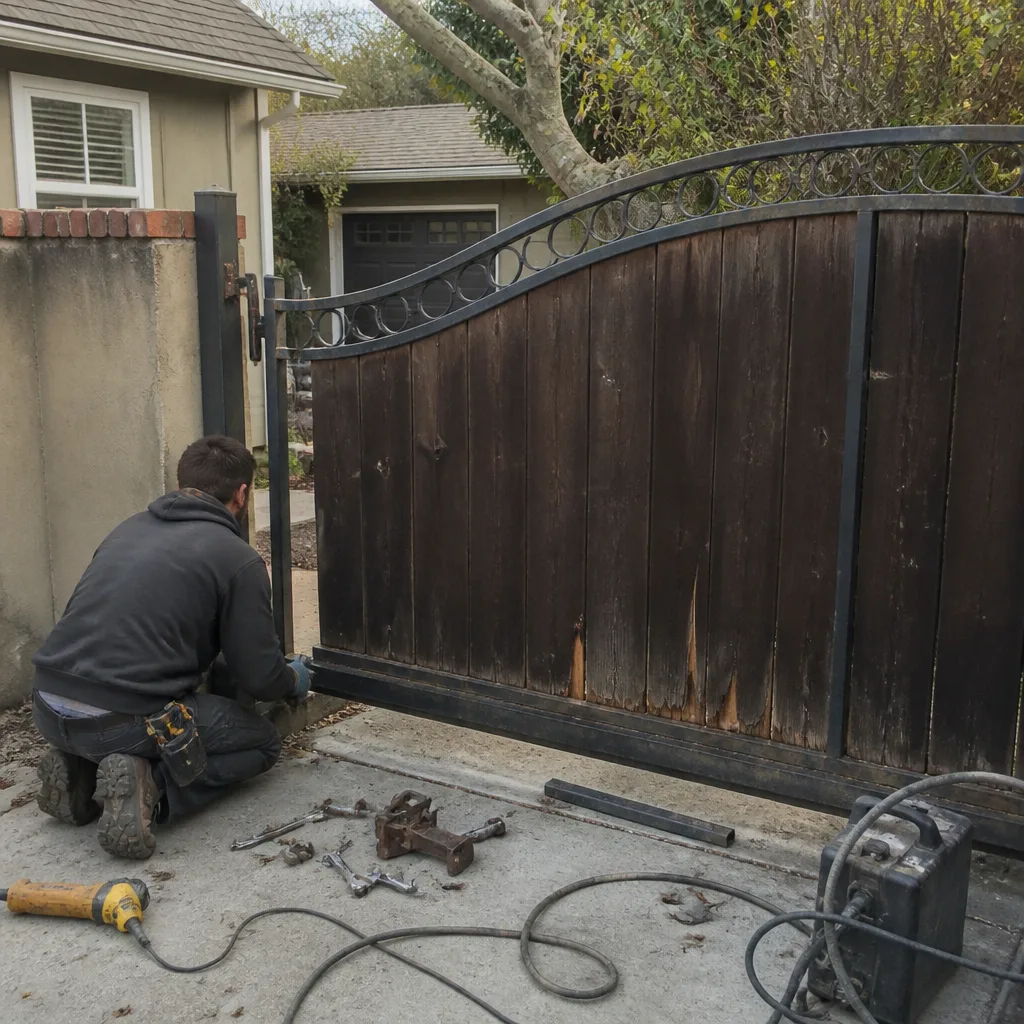 Before
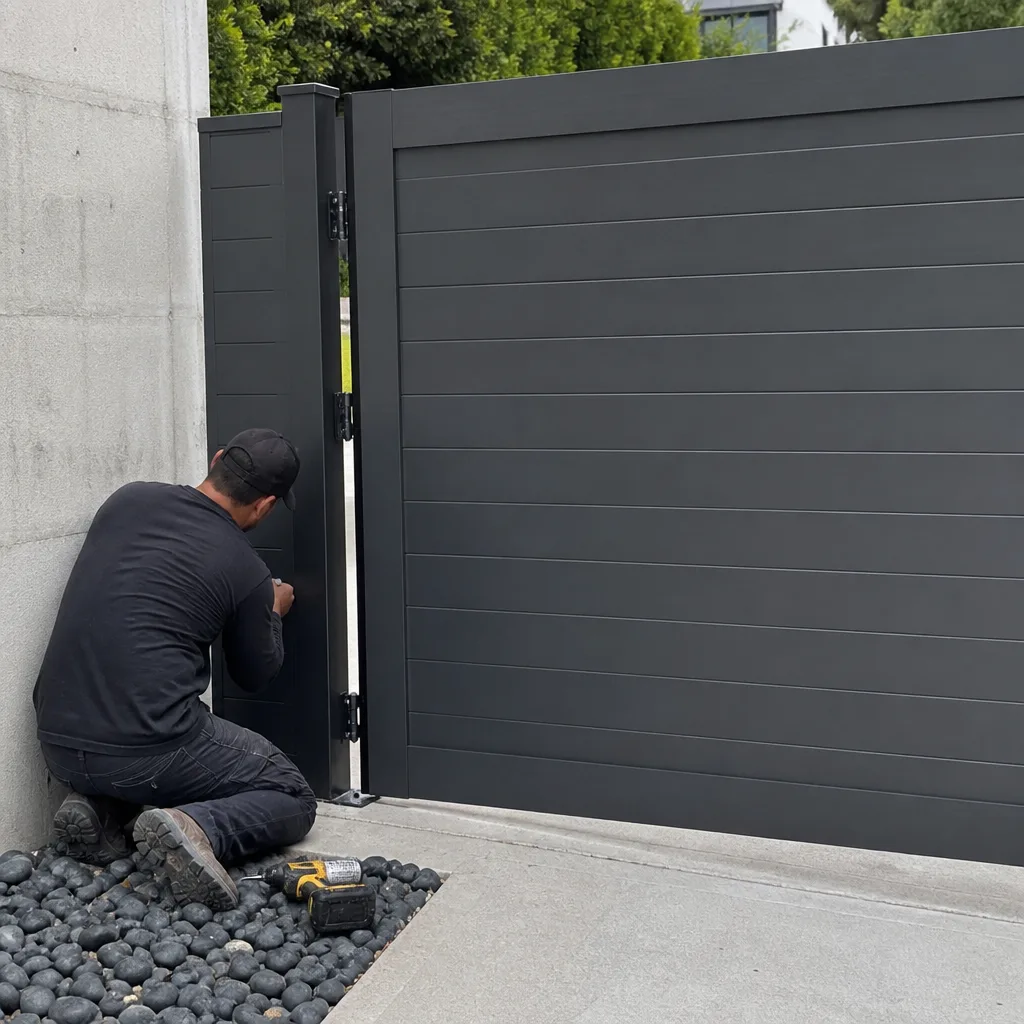 After
After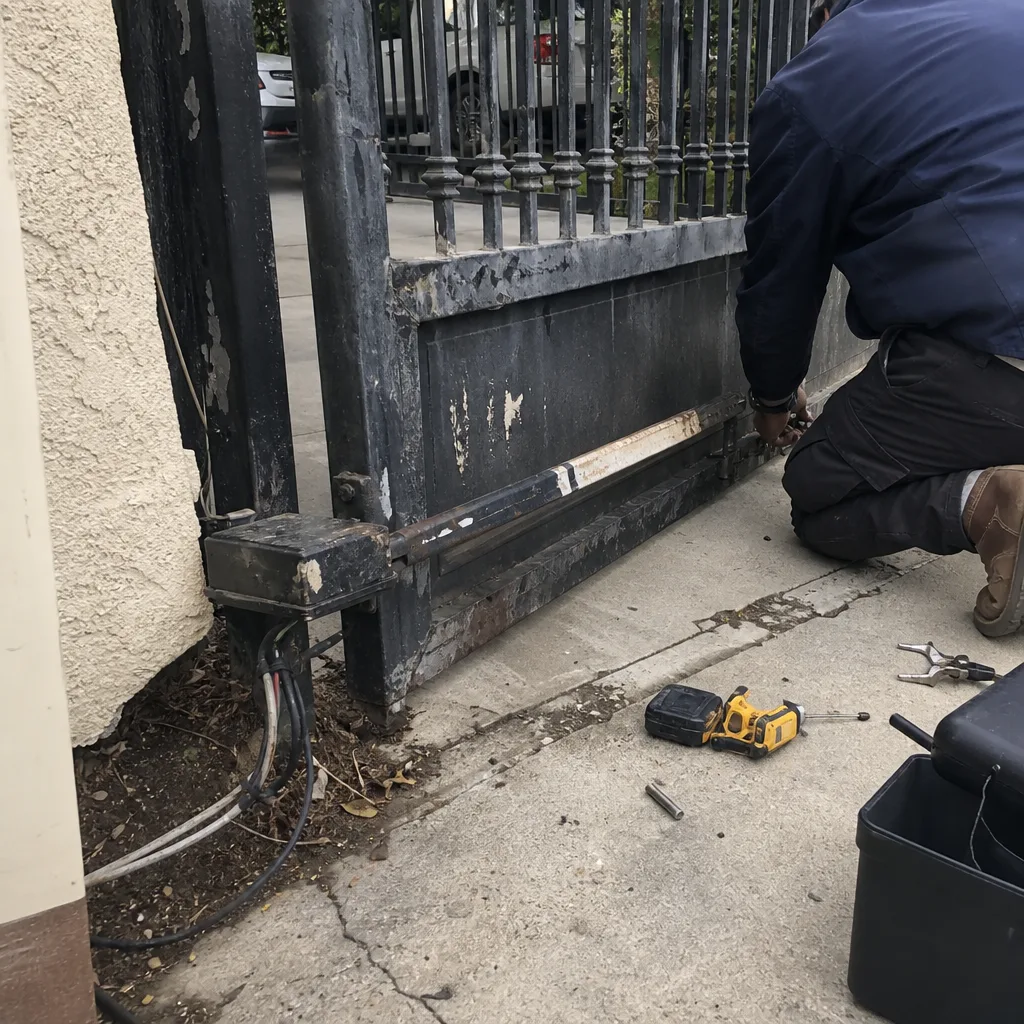 Before
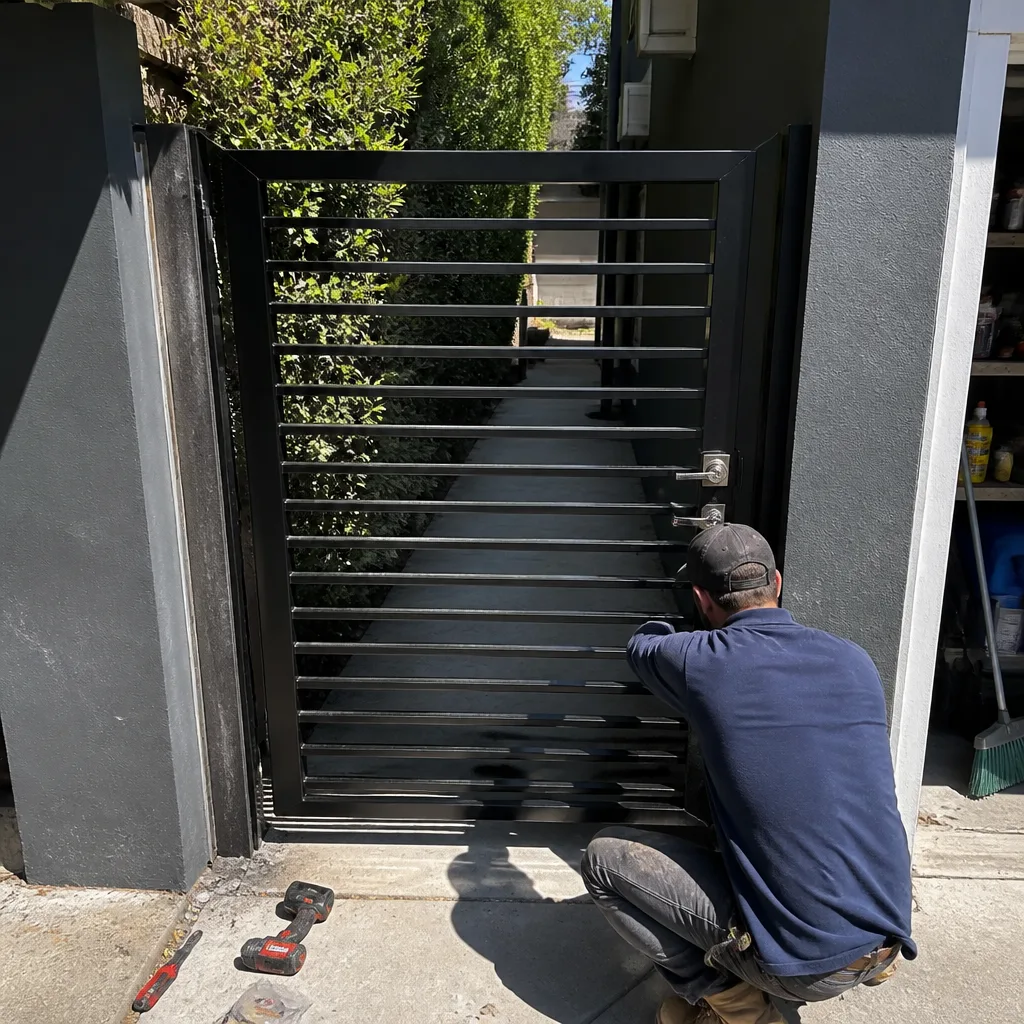 After
AfterSeasonal Gate Repair Care for West Hollywood: Year-Round Homeowner’s Guide
Gate operators in West Hollywood fail at higher rates in October than any other month, and it’s not because of rain. It’s because summer heat dried out lubricants that were already thin from the previous spring’s neglect. Most homeowners think of gate maintenance as a spring task, but West Hollywood doesn’t have four seasons. It has two gate-stress cycles: a marine-layer corrosion window from late winter through spring, and a thermal-expansion and dry-lubrication window from late summer through fall. This guide explains both cycles, what actually fails during each one, and the specific maintenance tasks worth doing before those failure modes hit your driveway gate. For a deeper dive, see The Complete Guide to Gate Repair in West Hollywood.
Quick Answer
Seasonal gate care in West Hollywood means scheduling maintenance around two stress windows instead of a generic quarterly calendar. The marine layer from February through May corrodes electrical connections and unpainted steel, so that period calls for dielectric greasing, terminal tightening, and moisture sealing. The late-summer and fall heat cycle bakes lubricants out of hinges and gearboxes, so September maintenance should focus on re-lubrication, sensor alignment checks, and thermal clearance measurements on aluminum frames. A homeowner who handles those two windows each year will catch most failures before they happen, and the work takes about two hours per gate. For help deciding what’s safe to tackle yourself, read DIY vs Professional Gate Repair: The West Hollywood Homeowner’s Decision Guide.
Table of Contents
- West Hollywood’s Two Real Stress Cycles
- The Marine-Layer Window: February Through May
- The Heat Window: August Through October
- Task-and-Timing Table for Year-Round Gate Care
- Protecting Wiring, Conduit, and Junction Boxes
- Thermal Expansion in Aluminum Swing Gates
- Post-Windstorm Inspection Protocol
- Common Mistakes to Avoid
- When to Call a Professional
 Before
 After
AfterWest Hollywood’s Two Real Stress Cycles
West Hollywood sits in a narrow band between the coast and the inland valleys, and that geography produces two distinct weather patterns that do most of the damage to gate hardware. The first is the marine layer: that persistent overcast blanket that rolls in off the Pacific from late winter through spring. It’s not dramatic weather. There’s no downpour, no wind. But a low cloud deck parked over the city for weeks at a time pushes relative humidity high enough to condense water inside electrical enclosures. The second is the late-summer and fall heat cycle, often driven by Santa Ana winds, which pulls moisture out of everything and cooks the plastic and rubber components that gate systems depend on.
These two patterns matter more than the calendar. A gate that gets its hinge lubrication fixed in January will be dry again by September. A junction box that was clean in June can be corroded by March. The practical lesson is that maintenance should be scheduled against these two stress events, not against a generic “spring and fall” checklist that was written for climates with actual winters. In our experience serving West Hollywood gates, the customers who time their maintenance to these two windows pay less over the life of their gate than the ones who wait for a breakdown.
The Marine-Layer Window: February Through May
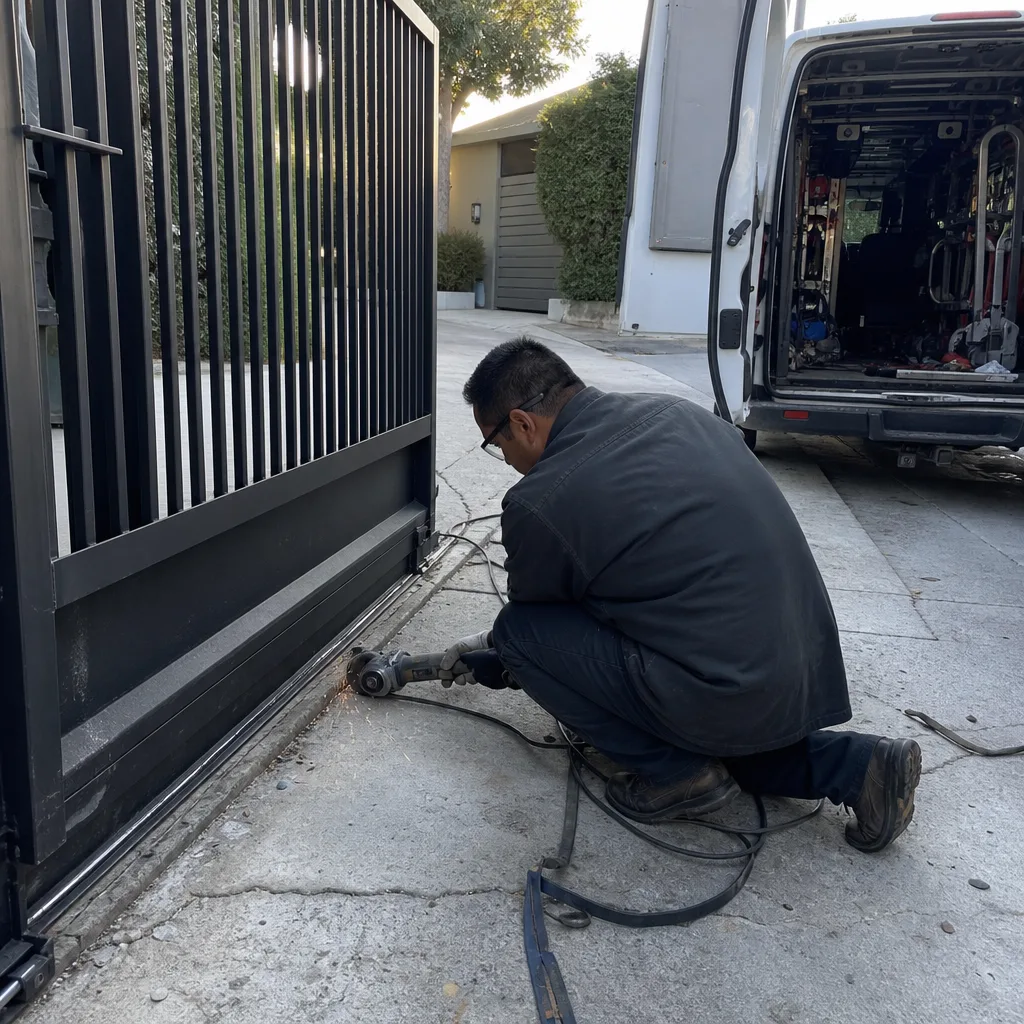
The marine-layer window is when West Hollywood gate electronics and unpainted steel are most vulnerable. The failure mode is quiet, and it’s already underway before anything stops working. Here’s what’s happening inside your gate operator during those months.
When the marine layer sits over West Hollywood, the air inside an outdoor electrical enclosure cycles between cool and damp at night and warmer and drier by afternoon. That cycle creates condensation on circuit boards, terminal blocks, and limit-switch contacts. Over weeks, the moisture reacts with copper and steel, forming corrosion layers that increase electrical resistance. The gate still works while the corrosion is thin. Then one morning, the operator board throws a fault because a limit-switch signal is degraded, or the photo-eye circuit drops out because a terminal screw has a green crust on it. The homeowner experiences a sudden failure. The technician sees weeks of corrosion that no one looked for.
- Check the enclosure seal. Open the operator cover and look at the gasket. A gasket that’s stiff, cracked, or flattened won’t stop humid air from entering. On many LiftMaster and DoorKing operators, the gasket is a replaceable part that costs a few dollars and takes ten minutes to swap.
- Inspect terminals and wire nuts. Look for green or white powder on copper connections. That’s oxidation. Tighten loose terminals, and on any connection carrying low-voltage signal wire, apply a small amount of dielectric grease before re-seating it.
- Wipe down unpainted steel. Pump brackets, chain idlers, and gate hinge barrels that aren’t painted or galvanized take the hardest hit. A light coat of corrosion-inhibiting spray after wiping them dry adds months of protection.
- Test the photo-eye. The infrared beam that stops the gate if something crosses the path is directly exposed to damp air. If a beam is intermittent during foggy mornings, it’s likely a corroded connector or a weak lens seal rather than a failed component.
Do these four checks during late February or early March in West Hollywood, and you’ll catch most marine-layer damage before it becomes a service call. We’ve opened plenty of operator boxes in the city during May that looked fine from the outside and had standing condensation inside. The fix at that point is a board replacement. The fix in February is sometime grease and a dry rag.
The Heat Window: August Through October
The second stress window in West Hollywood runs from late August through October, when afternoon temperatures climb into the high 80s and 90s and Santa Ana winds drop the relative humidity into the single digits. The failure modes here are mechanical and material, not electrical. Lubricants bake out, rubber stiffens, and aluminum frames move enough to change pivot alignment.
The October failure spike we see in West Hollywood is mostly lubrication. Grease in the gearbox of a swing-gate operator thins and separates under heat, especially if the gate was under-lubricated the previous spring. Hinge grease dries to a hard crust. Slide-gate rollers lose their film and begin grinding against the track. None of this produces a dramatic failure in August. It produces a gate that gets progressively slower and noisier until the motor overloads or a gear strips. By October, the calls come in.
The September maintenance pass should look like this:
- Re-lubricate every hinge and pivot point. Use a lithium-based grease on loaded hinge barrels, not a spray lubricant. Spray-type products are fine for quick fixes but don’t survive a full West Hollywood summer on a gate hinge.
- Check the operator gearbox oil or grease. If the operator has a fill port, open it and look. Dark, thin, or dry lubricant means it’s already degraded. Some FAAC and BFT operators need specific lubricants; a wrong substitution causes faster wear.
- Inspect rubber edge seals and weatherstripping. UV and heat harden rubber. A brittle edge sensor strip or a cracked limit-switch boot should be replaced before it splits entirely.
- Measure the gate’s travel time. Time the gate from closed to open. If it’s noticeably slower than when it was installed, the motor is working harder than it should, usually because of lubrication loss or hinge drag.
- Look for thermal cracks. Plastic gearbox housings, connector shells, and capacitor covers exposed to direct sun develop hairline cracks. A cracked capacitor cover on a hot day is a shock-risk component and should be swapped out.
- Late February: Enclosure seal check, terminal tightening, dielectric grease on signal connections, photo-eye lens cleaning.
- Mid-March: Unpainted steel inspection and corrosion treatment, chain or belt tension check, hinge bolt torque check.
- Late April: Full electrical system test: limit switches, safety loop (if present), photo-eye response time, battery backup condition.
- August: Thermal clearance measurement on aluminum swing gates (see the section below), rubber seal inspection, hinge and pivot re-lubrication with lithium grease.
- Early September: Gearbox lubricant check, travel time measurement, roller and track cleaning on slide gates, motor mount bolt check.
- Late October: Post-heat inspection: capacitor and connector crack check, battery health check, one full open-close-open cycle test with obstruction detection verified.
- Close the gate fully and mark the gap between the leading edge of the gate leaf and the fixed post or closed stop. Use a simple ruler or straightedge.
- Measure the gap at the hinge side as well, between the gate stile and the post.
- If the August gap at the leading edge is less than approximately half the February gap, or if the gate is rubbing or sticking when hot, the pivot brackets need a slight adjustment to compensate for thermal growth.
- Adjust the hinge-side shims or pivot bracket bolts so the gate has clearance through the full travel in both February and August. Don’t set it to “perfect” on a hot day; leave room for the metal to expand further and for the frame to return when it cools.
- Clear the full travel path. Remove debris from both sides of a swing gate’s arc and from the full length of a slide gate track. Debris packed into a track at the far end of travel doesn’t stop the gate until it tries to close all the way.
- Inspect the track and rollers. Bent guide rollers or a kinked track section won’t always be visible from a standing position. Run the gate and listen for how the rollers sound when they pass the debris zone. A rhythmic thumping usually means a flat spot or a bent flange.
- Check the gate frame for new dents or bowing. A strong gust can flex a hollow aluminum gate leaf far enough to leave a permanent bow. The gate still works, but a bowed frame changes the pivot geometry and shortens hinge life.
- Test the obstruction detection. After wind and debris, a misaligned photo-eye or a damaged safety edge often goes unnoticed until it fails to reverse. Block the beam and check for reversal. Do this after any storm, not just as an annual task.
- Re-torque mounting bolts. Wind vibration loosens the bolts that hold the operator to its pad and the hinges to the post. Two minutes with a wrench saves a follow-up service call.
- Lubricating a dirty hinge. Spraying lubricant over a hinge barrel that’s packed with West Hollywood dust and debris just turns the grime into a grinding paste. Wipe the hinge clean first, then lubricate.
- Using WD-40 on gate hinges. WD-40 is a water-displacement product, not a lasting hinge lubricant. It will dissolve existing grease and leave the hinge drier than before within a week. Use a lithium or silicone grease instead.
- Ignoring the gate’s travel time. A gate that used to open in 12 seconds and now takes 20 is telling you something. Waiting until it trips a thermal overload turns a lubrication job into a motor replacement.
- Adjusting limit switches without recording the original position. If the limit switch was set 12 degrees past travel and the homeowner dials it “a little” in one direction, the gate may stop short or over-travel. Record the original reading before any adjustment, or you’ll be guessing later.
- Pressure-washing the operator box. The marine layer already stresses enclosure seals. A pressure washer forces water past those seals in seconds and is a common cause of board failure on West Hollywood gates after a “cleaning.”
- Replacing the battery backup and assuming the charger still works. A new battery on a dead charging circuit will drain in weeks. Test the charger output at the same time, not just the battery voltage.
- Calling a general contractor instead of a gate specialist. Gate automation is specific work, especially on the electronics side. Companies that primarily build fences or pour concrete often don’t carry parts for Viking, Ghost Controls, DoorKing, or Elite operators and will steer the job toward a full replacement. Vance Gate Repair West Hollywood services whatever motor is already on the property before recommending anything new.
One thing worth knowing: the heat window is when we see the most “it worked fine yesterday” failures in West Hollywood. A gearbox that was dry all summer finally strips on a 95-degree afternoon because the remaining lubricant thinned to nothing. The fix, done in September, is an oil top-up and a hinge adjustment. The fix in October is a motor replacement. Timing matters.
Task-and-Timing Table for Year-Round Gate Care
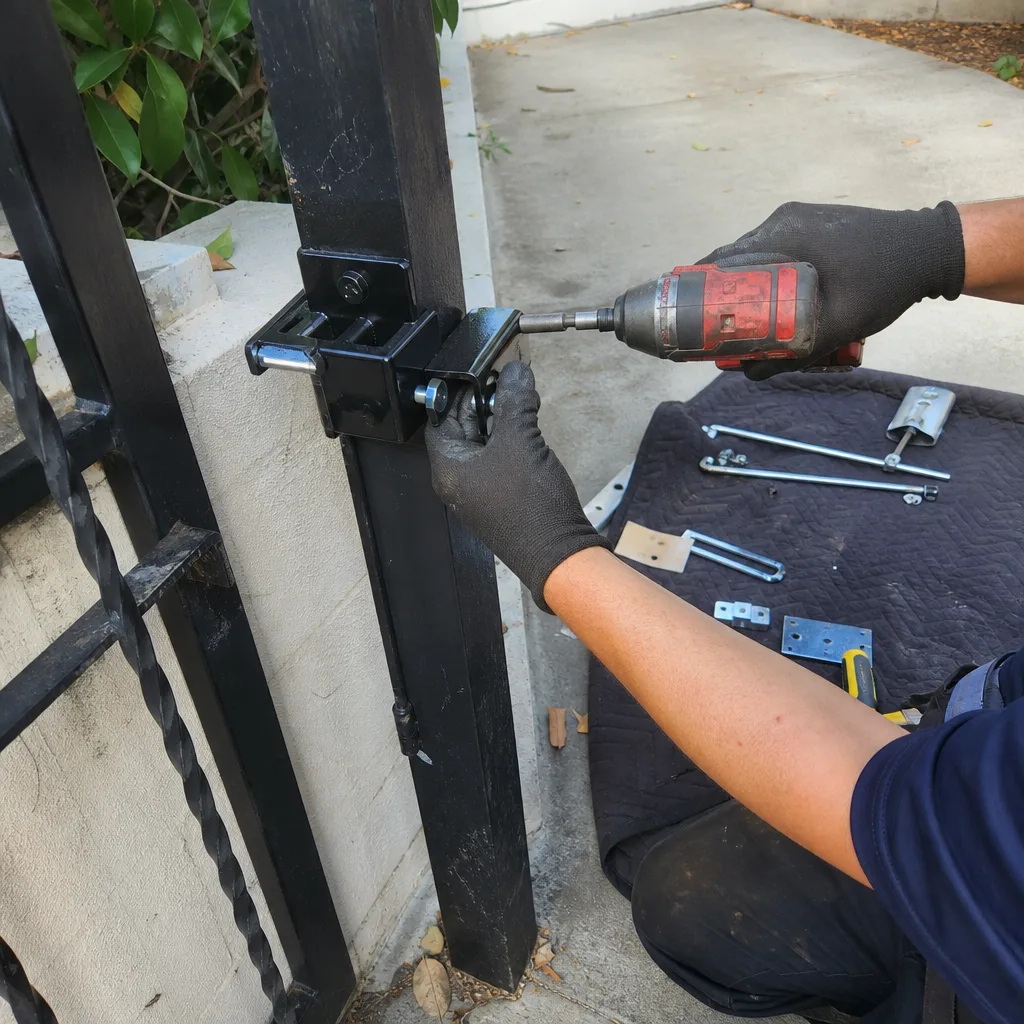
Instead of a generic quarterly checklist, here’s the task map we use when working on gates in West Hollywood. Each action is placed in the month where it’s most effective, given the city’s actual climate patterns.
This six-task cycle, done annually, covers both of West Hollywood’s stress windows. Total DIY time is roughly two to three hours across the year, and the parts cost is under $50 in most cases. The avoided repair call is usually $200 to $500.
Protecting Wiring, Conduit, and Junction Boxes
Exposed low-voltage wiring is the most common marine-layer casualty we find on West Hollywood gates, especially on older properties where the original installation used non-sealed conduit or plastic junction boxes that have warped in the sun. The fix isn’t expensive, and most of the material is on the shelf at any electrical supply house.
Start with the conduit. PVC conduit that’s cracked, or metallic conduit that shows rust bloom at the fittings, is letting moisture in. For the marine-layer window, the most effective retrofit is to replace cracked PVC with new sections and to seal every fitting with duct seal compound or a marine-grade caulk rated for electrical enclosures. At the junction box itself, install a small desiccant pack inside the box during the damp months. Desiccant packs, the same kind used in shipping containers, absorb enough moisture to prevent condensation from forming on terminal strips. Replace the pack every spring or sooner if it’s saturated.
Wire nuts inside exterior junction boxes are another failure point. Standard wire nuts corrode at the spring. A better option for West Hollywood’s damp season is a dielectric-filled connector, sometimes sold as a “weatherproof wire connector,” which surrounds the splice in silicone. They cost about $1 each and turn a recurring corrosion problem into a one-time fix. For any low-voltage control wiring that runs in exposed locations, running it through liquid-tight flexible conduit is the long-term answer. That’s what we install on access-control circuits in commercial settings, and the same material works on a residential driveway gate.
One caution: if the junction box shows signs of standing water or heavy corrosion on line-voltage wiring, do not open it wet. That’s where “how it works” ends and a licensed electrician begins.
Thermal Expansion in Aluminum Swing Gates
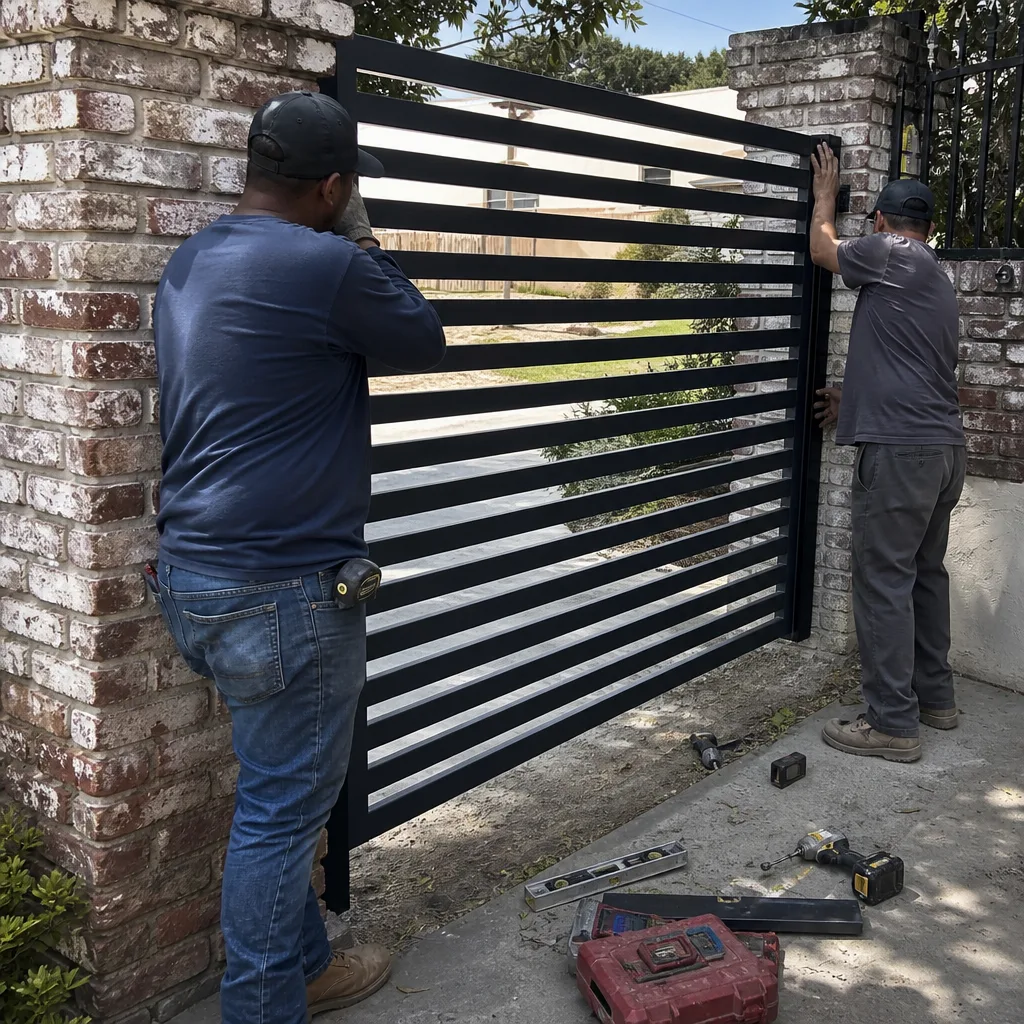
West Hollywood has enough of a temperature swing between February mornings and August afternoons to move an aluminum gate frame measurably. Aluminum expands about 13 millionths of an inch per inch of length per degree Fahrenheit of temperature change. On a 12-foot gate that spans from a 45-degree February morning to a 95-degree August afternoon, that’s roughly a quarter inch of growth along the length of the gate leaf.
A quarter inch doesn’t sound like much, but it changes two things: the gap between the gate edge and the closed stop, and the effective load on the pivot bearings. A gate that was perfectly aligned in February will be snug in August. The right maintenance move is to measure and adjust pivot-point clearance in August, not January.
Here’s the measurement we record on aluminum swing gates during summer service calls in West Hollywood:
We record these two measurements on every visit, winter and summer, so the homeowner has a baseline to compare against. Without that record, the next technician who comes out is guessing whether the gate was always tight or whether something moved.
Post-Windstorm Inspection Protocol
West Hollywood’s canyon-adjacent streets, particularly those running up toward Laurel Canyon and the Hollywood Hills edge, see heavier debris loading from windstorms than the flatter parts of the city. Palm fronds, eucalyptus branches, and wind-blown plastic end up against gates and along tracks. Debris isn’t just an obstruction; it changes the load on the operator and, in the worst case, derails a slide gate or bends a hinge bracket.
After any significant wind event, run through this protocol:
If the gate was hit directly by a falling branch or sustained a hard impact, don’t run it repeatedly to “test” it. A bent operator arm or cracked weld can hold until the next cycle and then let go. Have a professional look at it before the gate gets used again. Gate repair in West Hollywood is one of the services we provide daily, and a post-storm check is a typical call for us this time of year.
Common Mistakes to Avoid
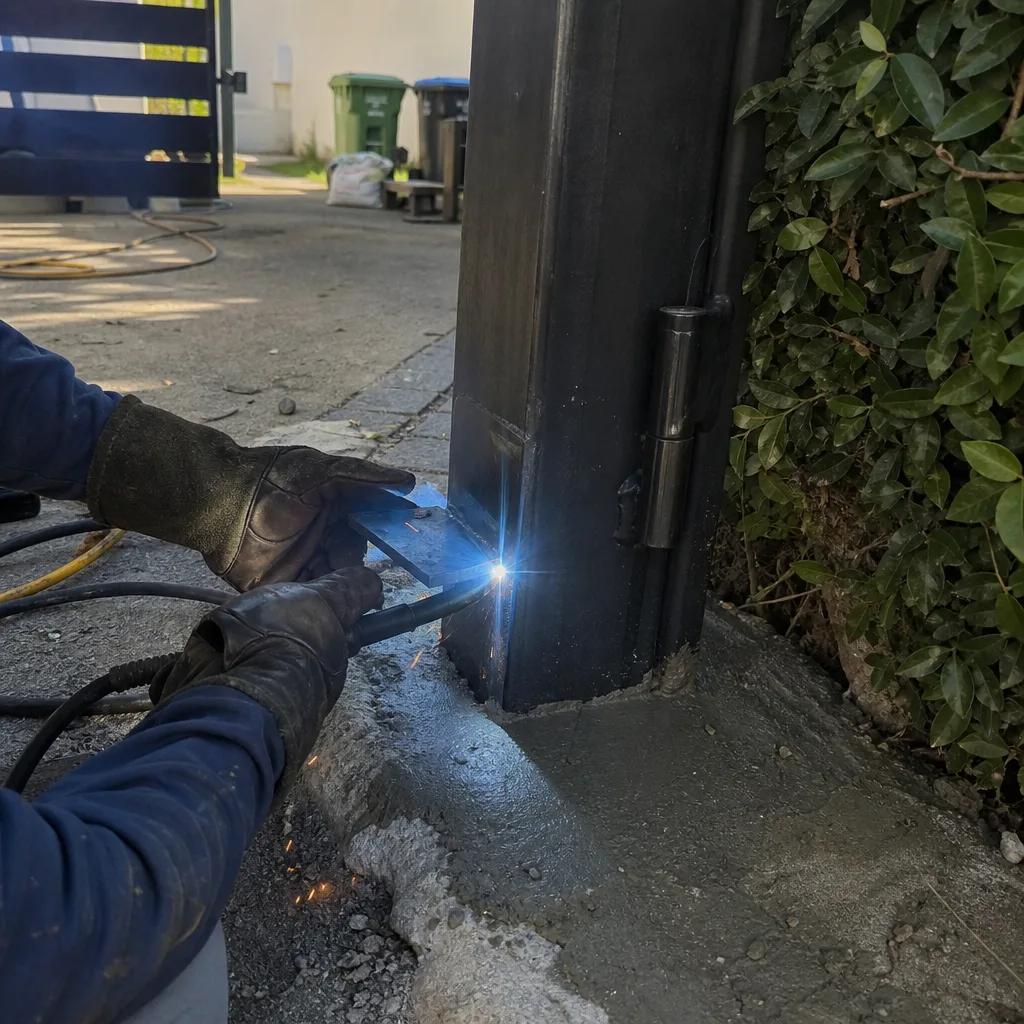
When to Call a Professional
Some gate maintenance is safely DIY, but certain conditions call for a trained technician. If the operator trips a breaker or blows a fuse repeatedly, don’t keep resetting it; that’s an electrical fault, not a nuisance trip. If the gate reverses unexpectedly or no longer reverses when obstructed, the safety system is compromised and needs immediate attention. If the gate has come off its track, or a hinge bracket is bent or cracked, running the gate further risks derailing it completely and causing injury. If you see exposed line-voltage wiring anywhere near the operator or junction box, that’s a job for a licensed professional. And if you’ve adjusted limit switches, lubricated hinges, and cleaned the photo-eyes and the gate still misbehaves, the problem is deeper than routine maintenance. Gate Repair by Vance Gate Repair West Hollywood offers free estimates in West Hollywood; call (424) 321-7416 and a live person answers, any hour.
Frequently Asked Questions
Seasonal gate maintenance in West Hollywood typically runs between $95 and $250 per visit, depending on the gate type, the operator brand, and whether any small parts like gaskets or dielectric grease packs are replaced. A full two-window annual plan for a single swing gate usually lands between $200 and $400 total. Call (424) 321-7416 for an exact quote; estimates are free and the price is written down before any work starts.
Yes. We dispatch same-day in West Hollywood for gate repairs, and a live person answers the phone 24/7, so you won’t wait in a voicemail queue at 11 p.m. If the gate is stuck open or won’t close, call (424) 321-7416 and we’ll schedule the soonest available technician with the right parts for your operator brand.
The marine layer damages gate electronics through condensation inside the operator enclosure and junction boxes. The most effective protection is a sealed enclosure gasket, dielectric grease on signal connections, and desiccant packs inside the junction box during the February to May window. Gate motor and opener servicing in West Hollywood includes these preventive measures on every seasonal visit.
A full gate installation in West Hollywood includes the gate structure, hinges or track, operator, power run, safety edges and photo-eyes, and programming of all limit and obstruction settings. The written quote lists every line item, and you receive a photo record of the completed work. For a free measure and written price, call (424) 321-7416.
Yes. We run power and low-voltage control wiring, install safety edges and photo-eyes, and test obstruction detection as part of every operator installation or upgrade. The work is done to code and photographed before the trench closes. See more at gate installation in West Hollywood, or call (424) 321-7416 to schedule a site visit.
We service nine major automation brands, including Viking, Ghost Controls, DoorKing, and Elite, plus LiftMaster, FAAC, BFT, Linear, and Mighty Mule. If your West Hollywood gate already has an operator from any of those brands, we’ll work on it directly rather than steering you toward a replacement you don’t need. Call (424) 321-7416 and we’ll identify the motor over the phone and bring the right parts.
The Bottom Line
West Hollywood gates fail in predictable patterns that have nothing to do with the four-season calendar. The marine layer from February through May attacks electrical connections and unpainted steel; the late-summer and fall heat dries out lubricants and rubber and shifts aluminum frames. Maintenance scheduled around those two windows costs less than repairs scheduled around breakdowns, and the work is mostly inspection, lubrication, and small-part replacement that any careful homeowner can do. For everything beyond that, a gate specialist with commercial documentation habits makes a visible difference. You can also explore more guides & resources on our blog. You get a written price before work starts, a photo record of what was found and what was changed, and a promise that covers the work for a full year. That’s the standard every gate in West Hollywood should be serviced to, and it’s the one we hold ourselves to on every visit.
Written by Adrian Vance, Owner at Vance Gate Repair West Hollywood, serving West Hollywood since 2014.