
Last updated September 20, 2026
Free on-site gate assessment - hinges, posts, and your LiftMaster or Nice gate operator checked before anything is quoted
The assessment is free and the quote is the invoice.
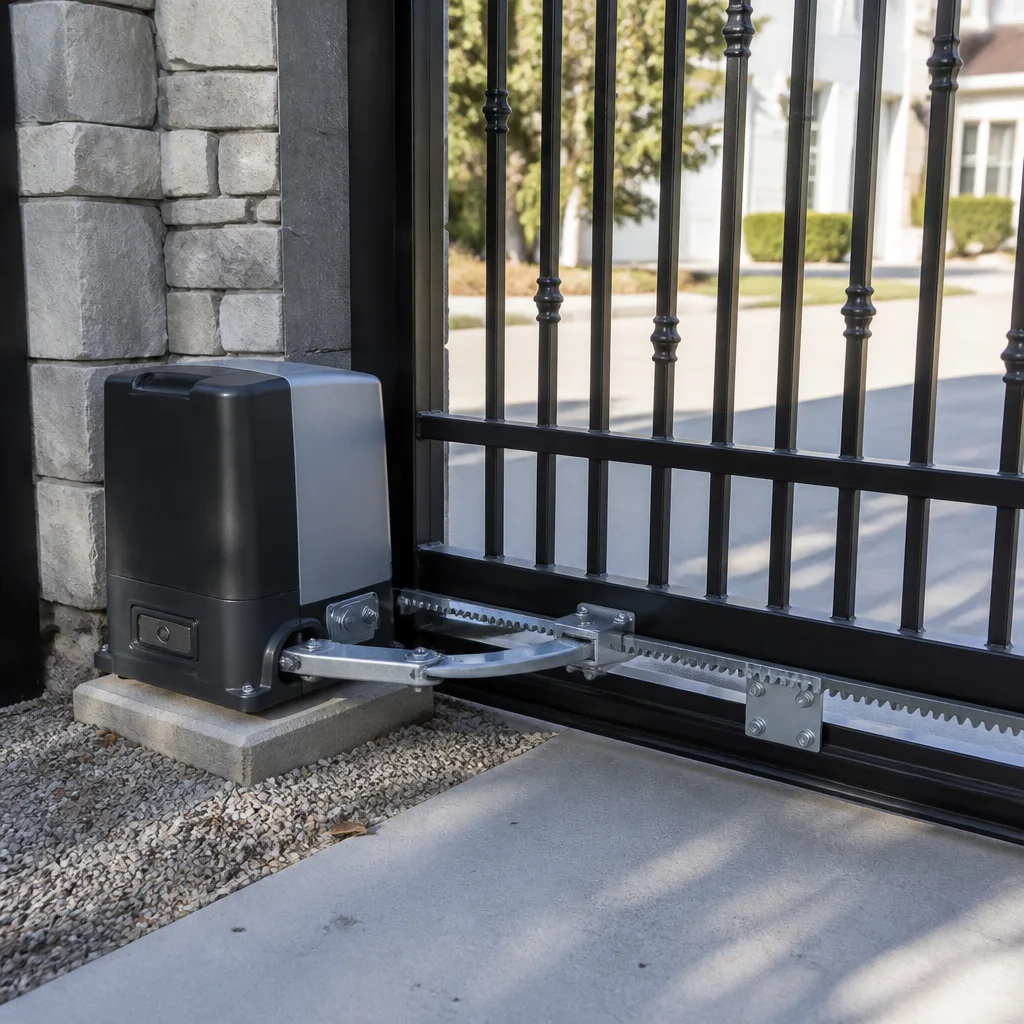
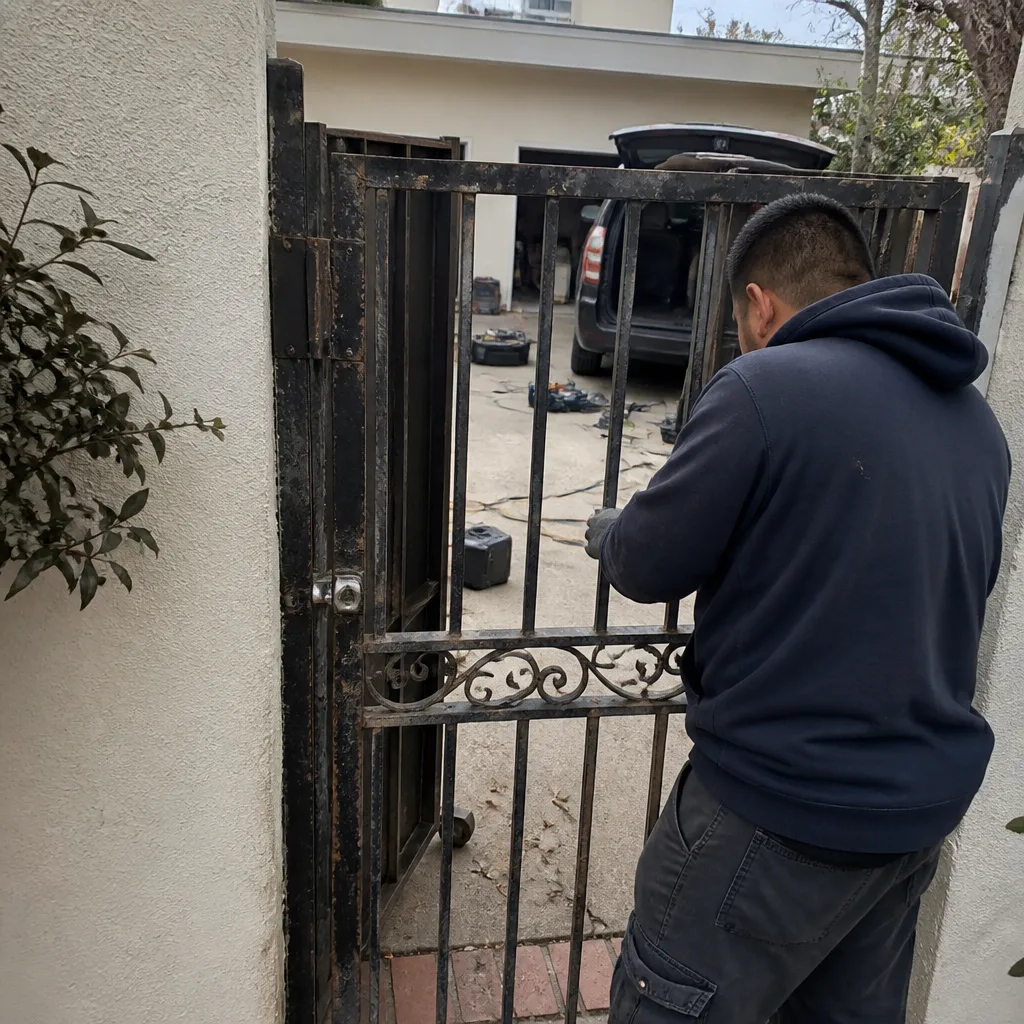 Before
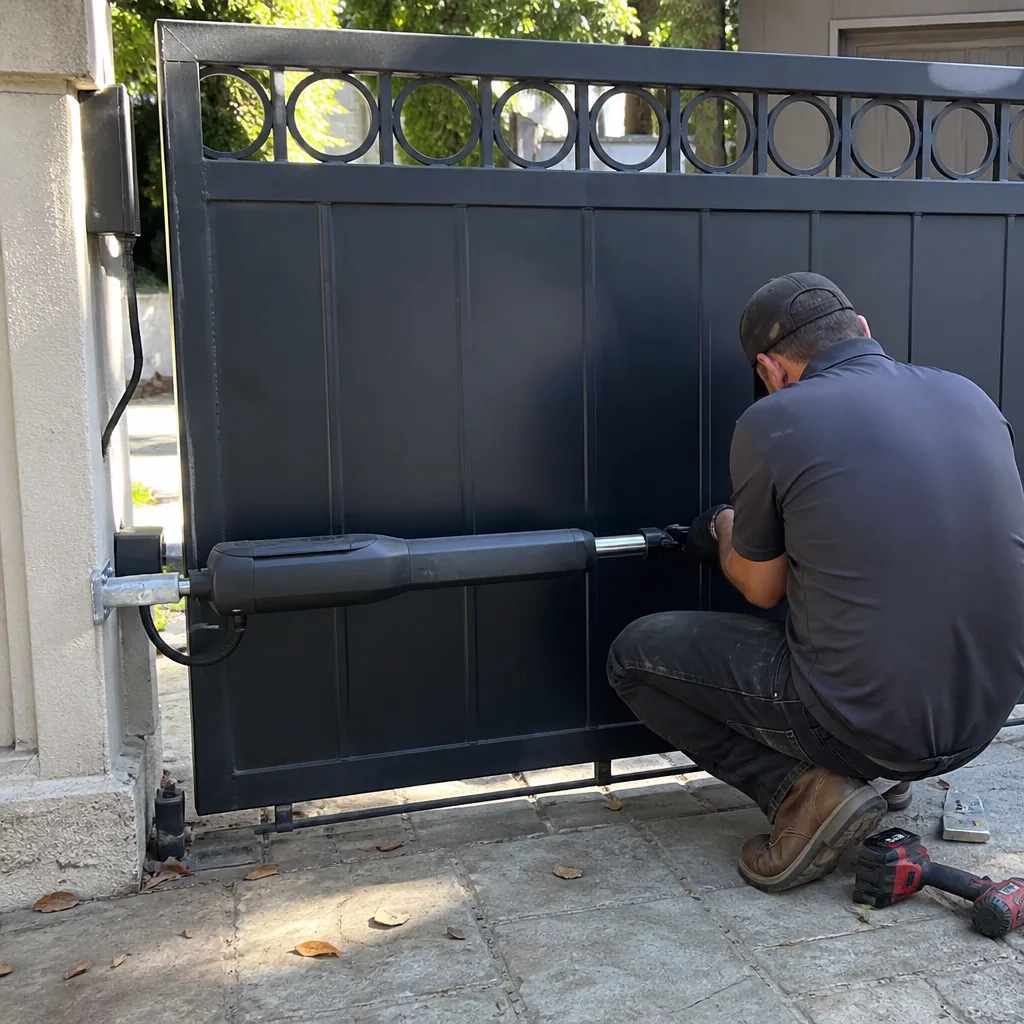 After
After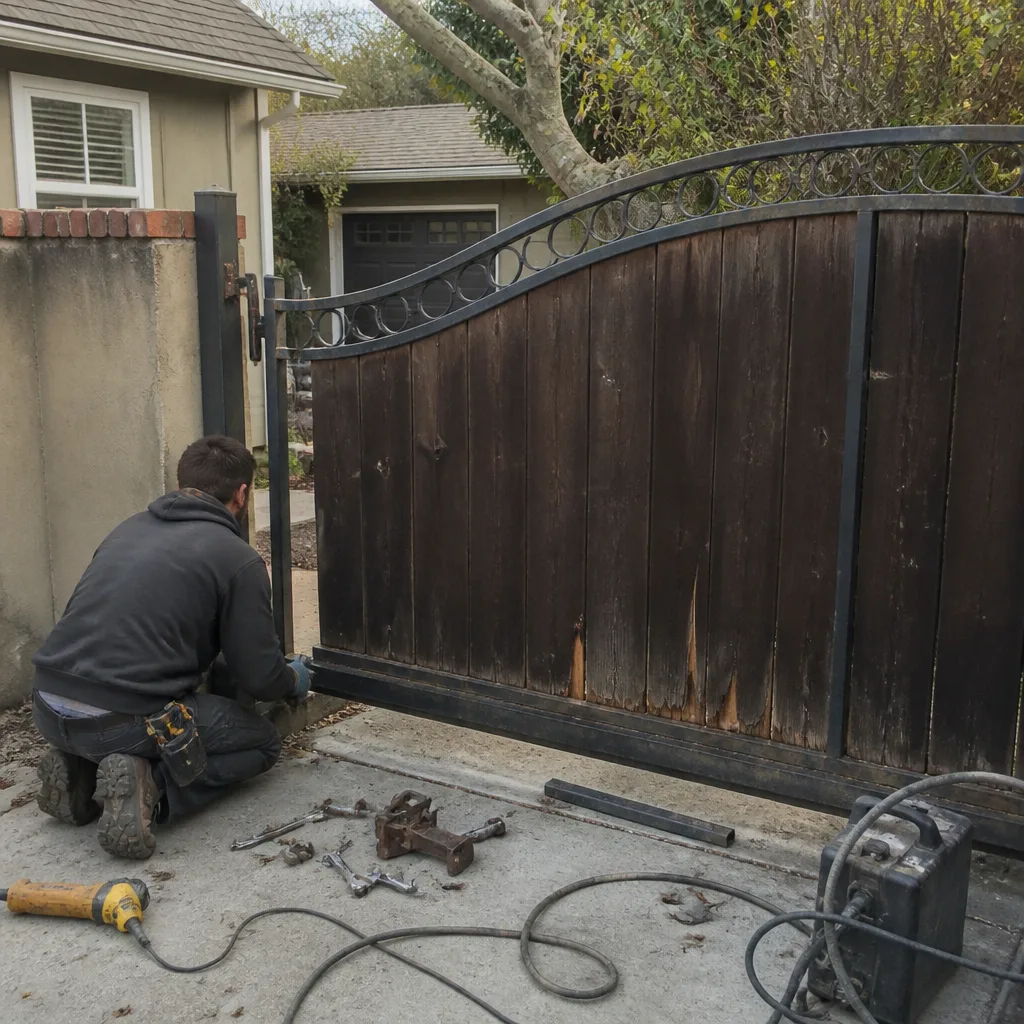 Before
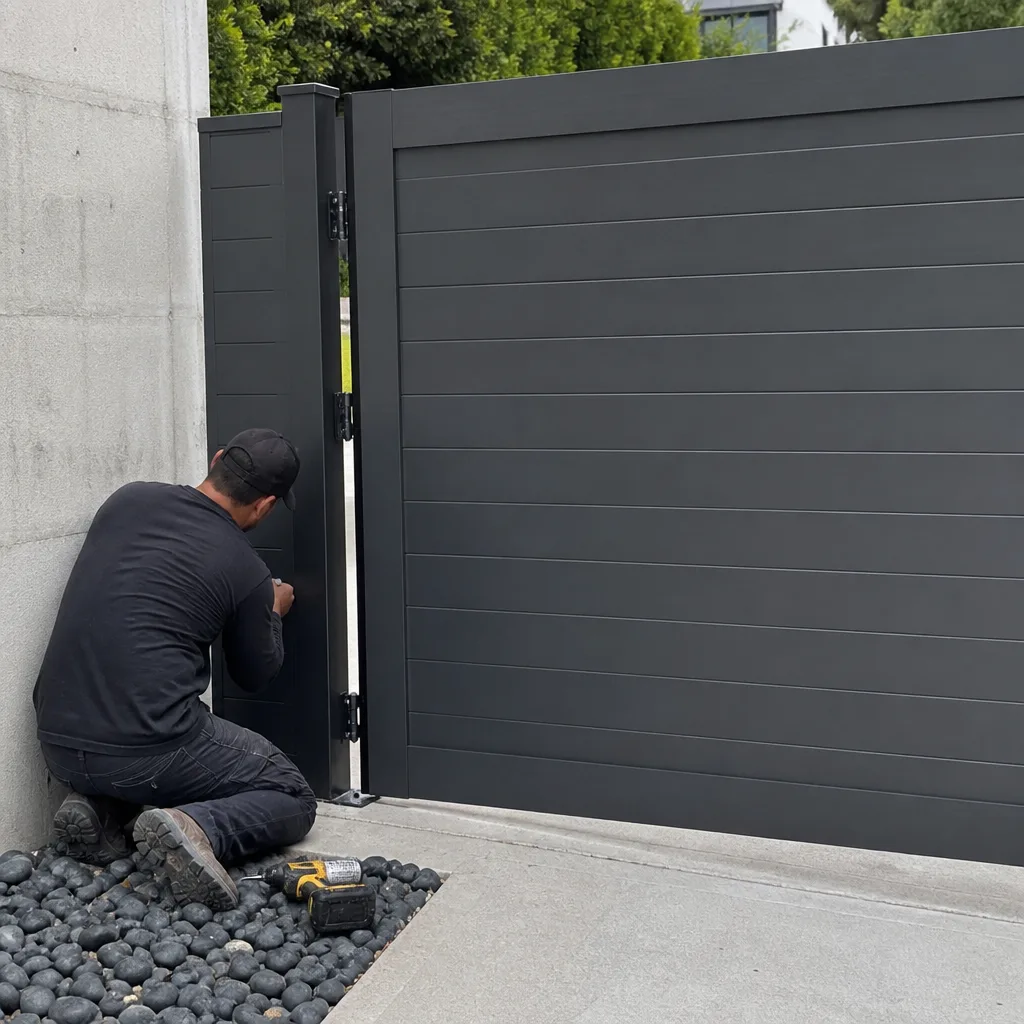 After
After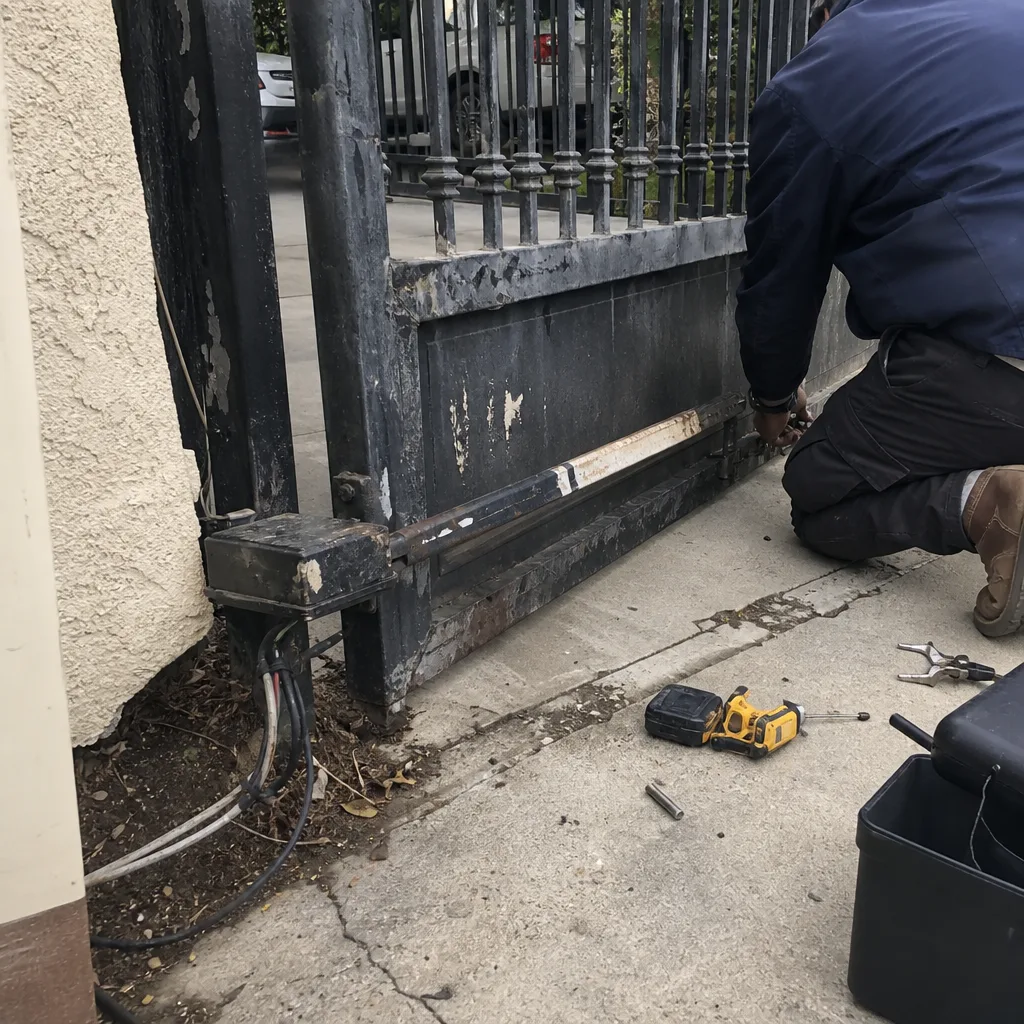 Before
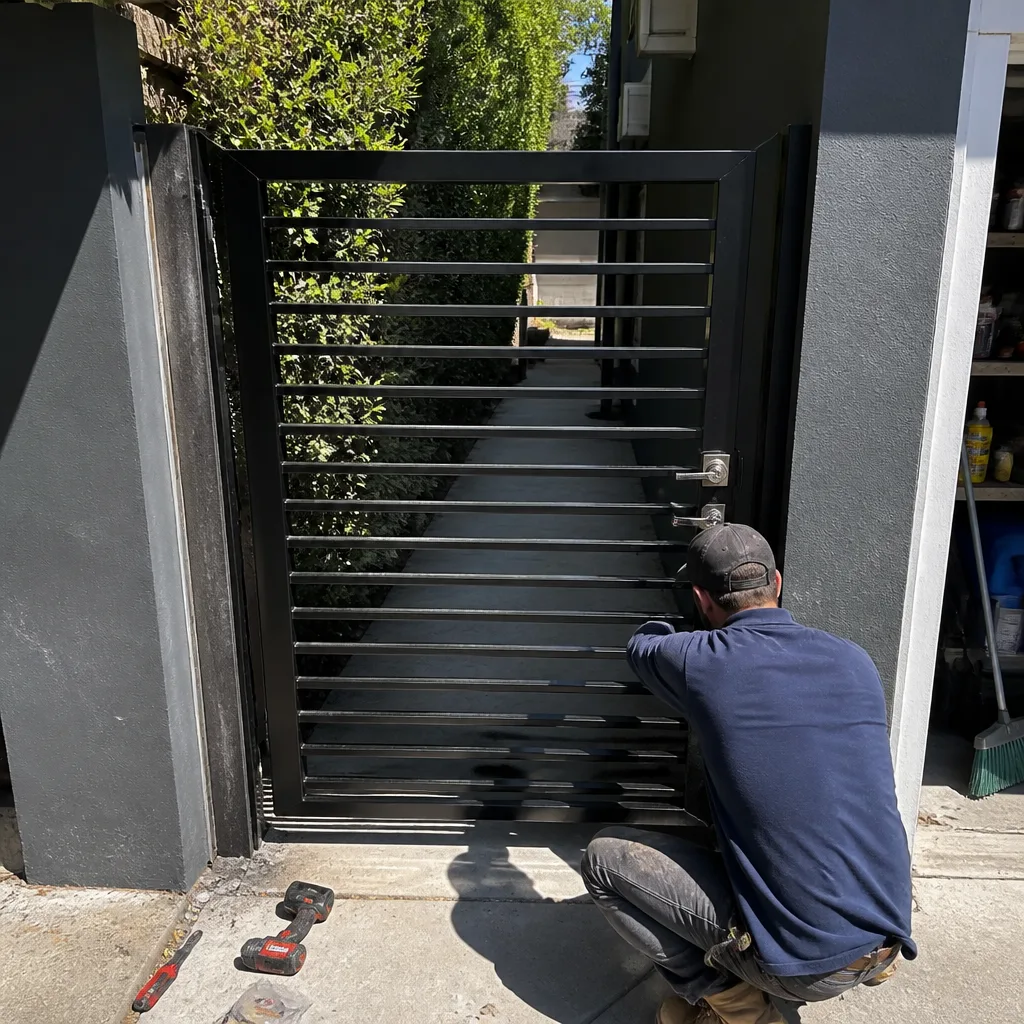 After
AfterDIY vs Professional Gate Repair: The West Hollywood Homeowner’s Decision Guide
The insurance policy in your filing cabinet has a gate clause buried in the fine print, and it does not care how many YouTube tutorials you watched. A West Hollywood homeowner who replaces a gate operator on Saturday morning without installing a compliant entrapment sensor has potentially created a coverage gap that only surfaces when an injury claim lands on the kitchen table, months or years later. What follows is a plain-language accounting of where California law, UL 325 safety standards, and standard homeowner’s insurance actually draw the line between what you may do yourself and what requires a licensed contractor.
Quick Answer
In West Hollywood, California law and UL 325 entrapment-protection standards allow homeowners to perform basic maintenance and adjustments: lubricating hardware, replacing remote batteries, tightening bolts, and adjusting limit switches within manufacturer specifications. Replacing a gate operator motor, rewiring control boards, altering entrapment sensors, or modifying the gate’s structural frame generally requires a licensed contractor, and doing that work yourself risks voiding insurance coverage if someone is injured by the gate afterward. When in doubt, call a licensed gate technician for Gate Repair services and get a written price before any work begins.
Table of Contents
- What California Law Actually Says About DIY Gate Work
- UL 325 Entrapment Protection: The Standard Most DIYers Have Never Heard Of
- The Insurance Liability Gap: What Your Policy Doesn’t Cover
- The Honest DIY Cost-Benefit Breakdown on a Gate Operator Swap
- Work You Can Legally and Safely Do Yourself in West Hollywood
- When DIY Makes the Professional Repair More Expensive
- Common Mistakes to Avoid
- When to Call a Professional
- Frequently Asked Questions
- The Bottom Line
 Before
 After
AfterWhat California Law Actually Says About DIY Gate Work
California Business and Professions Code Section 7028 makes it a misdemeanor for an unlicensed person to perform work “for another person” when a contractor’s license is required. That phrase, “for another person,” is doing important work here: it means a homeowner can perform many repairs on their own property without a license. But the same code section, along with Section 7048, limits unlicensed work to projects under $500 in combined labor and materials. Once the scope creeps above that threshold, even a homeowner acting alone needs either a license or a very good reason to believe the work falls outside contractor classification.
Gate automation, which is the portion of gate work involving motors, control boards, photo-eyes, and loop detectors, falls under the C-61 / D-28 classification for door, gate, and activating devices. That classification covers installation, repair, and modification work performed for compensation. For a homeowner working on their own property without compensation, the license requirement generally does not attach. But “generally” is doing a lot of breathing there. The City of West Hollywood’s building and safety division can require permits for gate work when the project involves structural changes, electrical runs, or changes to the gate’s path of travel. A homeowner who replaces an operator with a different horsepower motor, or who adds a new conduit run, may find themselves in permit territory without realizing it.
Then there is the question of what happens after the DIY project. If the work fails and a licensed contractor is called in to repair it, the contractor’s scope includes diagnosing what the homeowner did first. That diagnostic time is billable, and it can rival the cost of what a professional would have charged for the original job done right. We have seen West Hollywood driveways where a homeowner wired a new FAAC control board backward, and the fix required two hours of wire tracing before repair could begin. The homeowner saved $400 on the install and spent $680 on the correction.
UL 325 Entrapment Protection: The Standard Most DIYers Have Never Heard Of
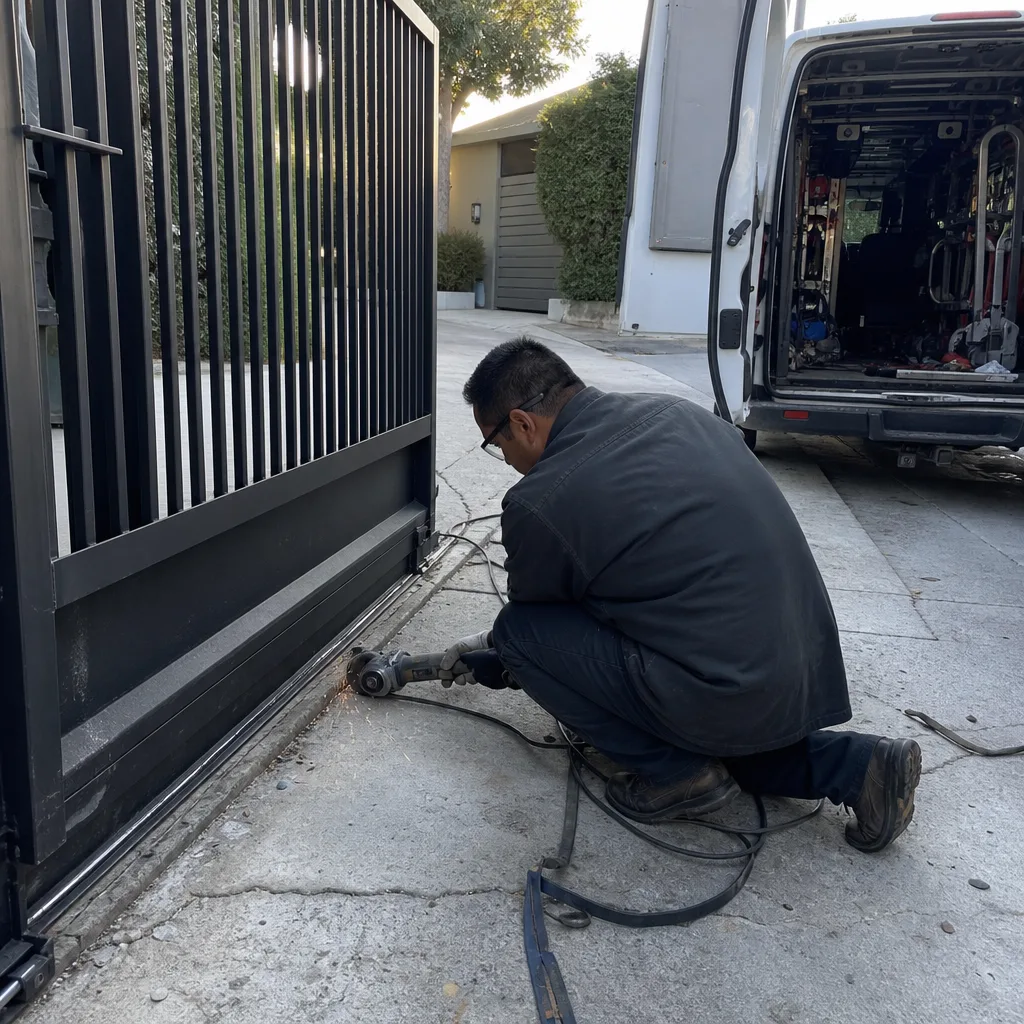
UL 325 is the Underwriters Laboratories standard that governs automatic gate operators and their safety devices. Every gate motor sold in the United States carries a UL 325 listing, and every installation of that motor, whether professional or DIY, must comply with the standard’s entrapment-protection requirements. The entrapment protection is not optional. It is the legal safety floor for any automated gate, and it exists because automated gates have killed people, including children, when a closing gate encountered something in its path and did not reverse.
Under UL 325, every automated gate installation must include at least two independent entrapment-protection measures. These are devices like the photo-eye, an infrared beam that stops and reverses the gate when the beam is broken, edge sensors, pressure strips that detect an obstruction at the gate’s leading edge, and inherent entrapment protection built into the operator itself, like an obstruction-detection circuit that monitors motor resistance. The standard also governs gate speed, closing force, and the placement of controls. A control button must be located so that a person operating it cannot reach the gate’s moving parts, which is why installers mount keypads and push-buttons a certain distance from the travel path.
Why does this matter for the DIY question? A homeowner who buys a BFT or Linear operator from an online retailer gets a motor in a box. The UL 325 listing applies to the installation as a system, not to the motor as a standalone product. If the photo-eye is not installed, if the edge sensor is omitted, or if the motor’s reverse-on-obstruction sensitivity is set wrong, the installation is not UL 325 compliant, regardless of how well the motor itself was manufactured. In West Hollywood, where many properties have pedestrian gates alongside vehicle gates and where narrow side yards concentrate foot traffic, the entrapment risk is not hypothetical.
The Insurance Liability Gap: What Your Policy Doesn’t Cover
Standard homeowner’s insurance policies in California contain an exclusion for bodily injury arising from an “owned or rented motor vehicle” and, more relevant here, for injuries caused by excluded operations or by work that violates applicable law or safety standards. A UL 325 non-compliant gate installation is work that violates a recognized safety standard. When a gate injury claim is filed, the insurer’s adjuster looks at whether the installation met code and standard. If it did not, the claim can be denied on the grounds that the policyholder performed unauthorized or non-compliant work.
The gap does not close just because the injury happened months or years after the installation. Insurance coverage attaches to the incident, and the adjuster evaluates the gate’s condition at the time of the incident. If the operator was self-installed without entrapment protection, the denial letter will cite the missing devices and the UL 325 standard. The homeowner is then personally liable for medical costs, legal defense, and any judgment, and a gate-related injury involving a child can produce a settlement demand well into six figures.
California Insurance Code Section 533 also prohibits indemnification for loss caused by the willful act of the insured. A DIY install that omits a legally required safety device can be characterized as willful in some claims contexts, though that is fact-specific. What is not debatable is that a professional installation from a licensed contractor shifts the liability analysis. The contractor carries the license, the insurance, and the obligation to meet UL 325. That is part of what the labor cost buys. Read more about what a professional Gate Repair in West Hollywood includes before deciding whether the savings from DIY is real.
The Honest DIY Cost-Benefit Breakdown on a Gate Operator Swap
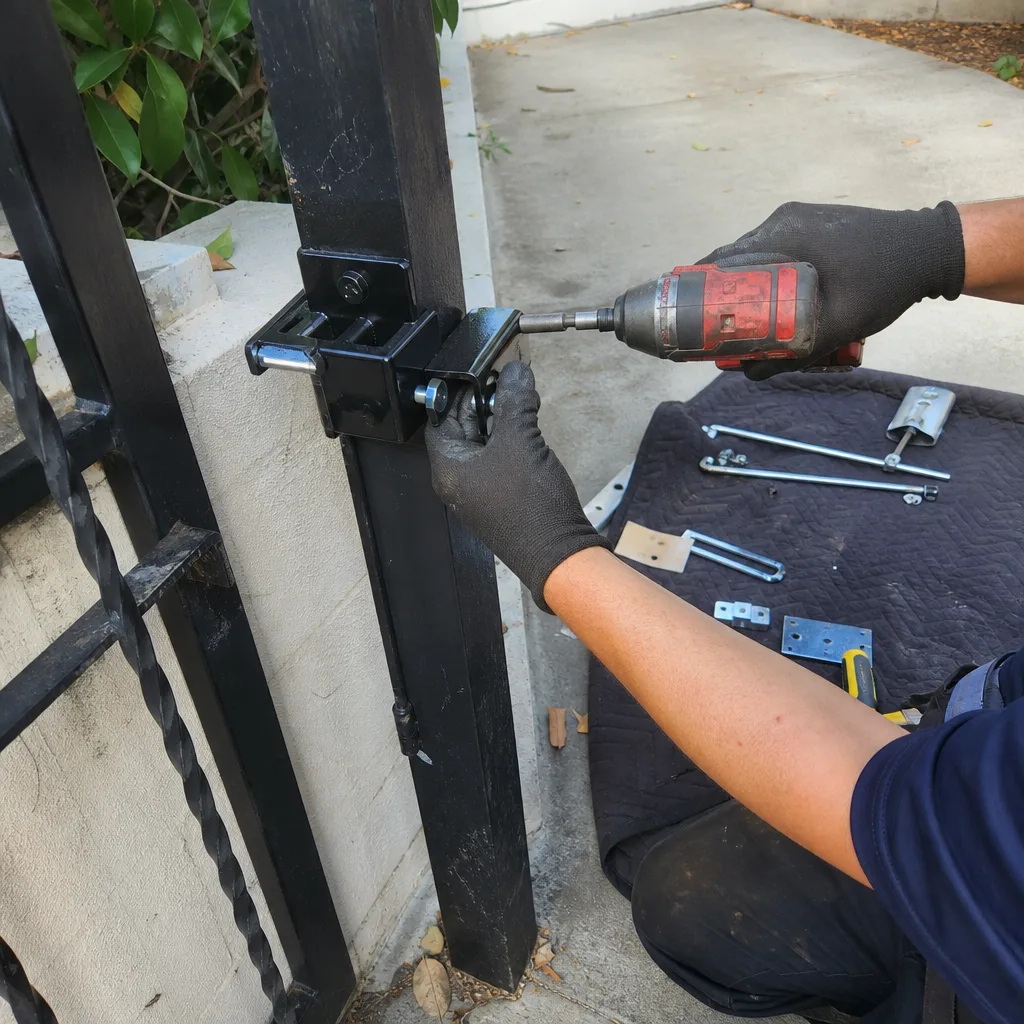
Here is the math on a typical residential swing-gate operator replacement in West Hollywood, using a mid-range Linear or BFT motor.
| Line Item | DIY Cost | Licensed Pro Cost |
|---|---|---|
| Operator unit (swing-gate, mid-range) | $450 – $650 | $450 – $650 (at cost, no markup assumption) |
| Mounting hardware, bolts, brackets | $35 – $60 | Included in labor line |
| Photo-eye and edge sensor (UL 325 compliant) | $120 – $180 | Included in scope |
| Labor (licensed technician, 3-4 hours) | $0 (your time, 6-10 hours) | $400 – $600 |
| Electrical connection and wiring | $25 – $50 (materials) | Included in labor |
| Permit (if required by City of West Hollywood) | $80 – $150 | $80 – $150 (passed through) |
| Total | $710 – $1,090 | $930 – $1,400 |
The DIY savings on a $650 operator swap winds up between $220 and $310, and that assumes the homeowner buys the correct operator, installs the entrapment protection properly, and does not damage the motor during wiring. A single wiring mistake that shorts the control board can add $200 to $400 in replacement parts, and a failed city inspection adds the permit re-fee plus the cost of whatever correction the inspector requires. The savings can evaporate in a single afternoon.
What the professional installation adds that the parts list does not show: a warranty that covers both parts and labor, a documented photo record of the before and after, and a point of accountability if the gate fails in the first year. The Vance Gate Repair West Hollywood home installation process includes a written scope and price before any tool is picked up, which is a different transaction than ordering a motor online and hoping the instructions cover your gate’s geometry.
Work You Can Legally and Safely Do Yourself in West Hollywood
Not every gate task requires a licensed technician. There are a handful of maintenance items that fall squarely inside the homeowner’s legal and practical authority, and doing them regularly extends the life of the gate and motor. Here is the list of genuinely safe DIY work, with the documentation habit that makes it useful later; for deeper guidance, see our Gate Repair Maintenance Checklist for West Hollywood Homeowners.
- Lubricating hinges, rollers, and tracks. West Hollywood’s dry air and fine dust build up in gate hardware. A white lithium grease or silicone spray applied to pivot points every 3-4 months prevents the grinding that leads to motor strain. This is the highest-value 15 minutes of gate maintenance available, and it requires no license, no permit, and no safety device.
- Replacing remote control batteries. When the gate starts responding inconsistently to the remote, the battery is the first check. Replace it, note the date, and test the remote from the same distance and angle where the inconsistency appeared. If it still misbehaves, the issue is the receiver or the antenna, and that is a service call.
- Adjusting limit switches within manufacturer specs. If the gate stops short of the closed position or overshoots and bounces back, the limit switch may need a slight adjustment. The manufacturer’s manual documents the adjustment procedure and the acceptable range. Make quarter-turn adjustments, photograph the before and after positions (including the switch dial, not just the gate), and write down what changed. If the gate refuses to hold the new limit, stop and call a technician. Continued misbehavior past the manual’s adjustment range means the problem is elsewhere.
- Cleaning photo-eyes and checking alignment. Dust and spider webs on the photo-eye lenses cause false obstruction readings. Wipe the lenses with a dry cloth and visually confirm the two units point at each other. If a technician ever works on the gate, they will ask when the photo-eyes were last cleaned, and you will have the answer.
- Tightening visible bolts and fasteners. West Hollywood’s temperature swings loosen hardware on metal gates over the course of a season. A visual fastener check every few months catches bolts before they work all the way out. Use the correct wrench size and do not overtighten; steel threads in aluminum housings strip easily.
For each item on this list, the documentation rule is simple: photograph what you touched, note the date and what you observed, and file it. If a gate technician from Vance Gate Repair or any company ever arrives, that record gives them a baseline, and it prevents paying a diagnostic fee to rediscover a problem that was already documented in your notebook.
When DIY Makes the Professional Repair More Expensive
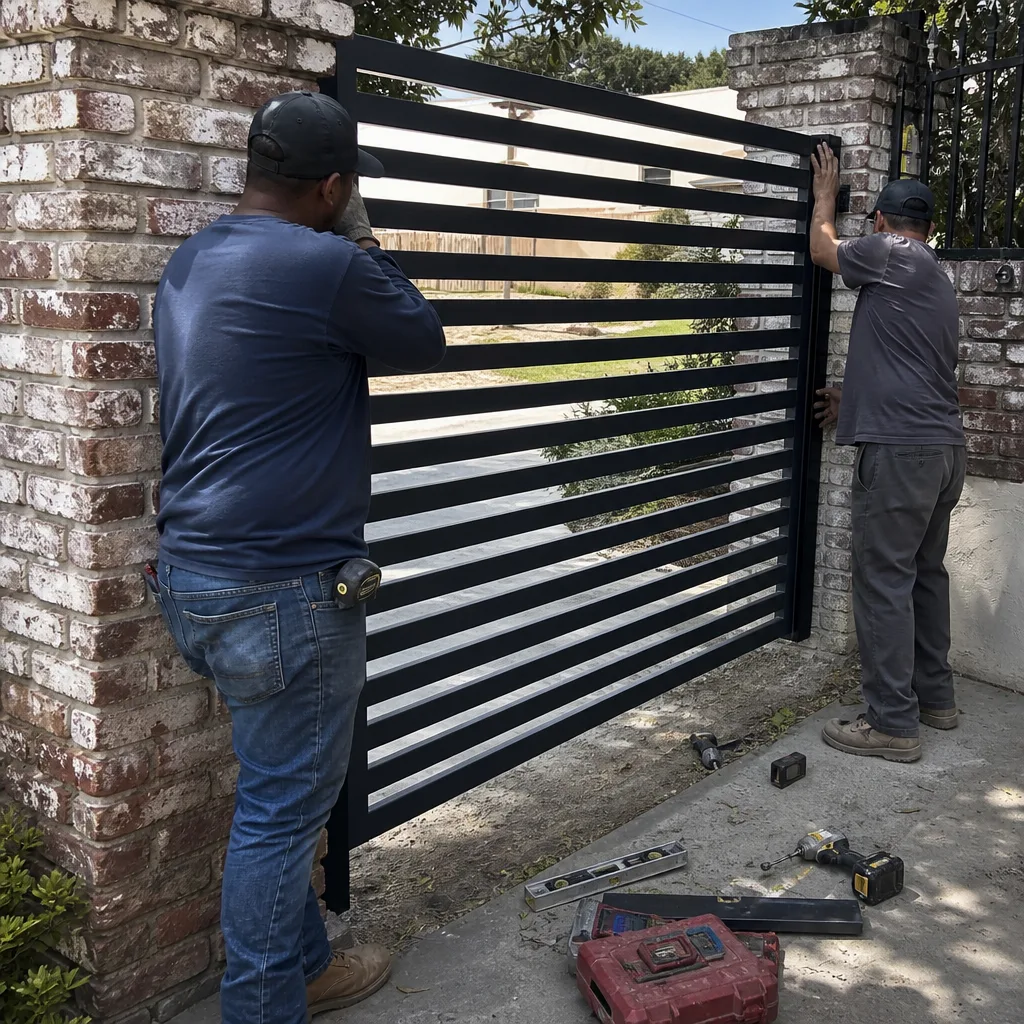
There is a specific way that DIY work actively increases the cost of a professional repair, and it is not the part most people expect. It is not that the homeowner broke something. It is that the technician must spend billable time undoing and diagnosing the homeowner’s work before legitimate repair can begin.
Imagine a West Hollywood homeowner replaces a control board on a Viking motor. They follow a YouTube video that covers a similar board from a different brand. The wiring colors do not match, and the board is connected with two wires reversed. The motor powers up, the gate moves in the wrong direction, and the homeowner concludes the motor itself has failed. A licensed technician arrives, tests the motor, traces the wiring, discovers the reversed connection, and rewires the board. The repair takes three hours, but only one of those hours addressed the actual problem. The other two hours were spent figuring out what the homeowner did.
We have walked into West Hollywood properties where a homeowner installed a new operator with self-tapping screws into a gate frame, and the screw heads interfered with the gate’s travel, producing a scraping noise the homeowner assumed was the motor. Another common scenario is the homeowner who adjusts the limit switch so far that the gate over-travels and bends the stop bracket, and the bracket replacement plus motor re-alignment costs more than the original limit-switch service would have. The rule we have learned from years of this: when the fix is not obvious within an afternoon, call before the problem compounds. A written diagnosis costs less than a written diagnosis plus the unwinding of a DIY attempt. For context on how installation work is scoped, see our Gate Installation in West Hollywood guide.
Common Mistakes to Avoid
- Assuming a UL 325 label on the motor means the installation is compliant. The label applies to the device, not to the installation. A motor without photo-eyes, edge sensors, or proper control placement is a non-compliant installation no matter what the box says.
- Adjusting the closing-force setting to “overcome” an obstruction. When a gate reverses because it is hitting something, increasing the closing force masks the problem and creates an entrapment hazard. The correct response is to identify and remove the obstruction, not to tell the gate to push harder.
- Replacing an operator with a different horsepower or duty-cycle class. A residential gate in West Hollywood that cycles 40 times a day needs a different operator than one that cycles 8 times a day. Installing an under-spec motor to save $150 produces premature failure and a second full replacement.
- Skipping the permit when the City of West Hollywood requires one. Structural gate changes and new electrical runs can trigger permit requirements. Calling the building and safety division and asking before starting costs a phone call.
- Not photographing the wiring before disconnecting it. Every connector, every terminal block, every wire color. A two-minute photo sequence saves hours of diagnosis later and makes a technician’s work immediately effective.
- Ignoring a gate that has become louder over time. Noise is data. A gate that gradually gets louder is reporting a developing problem, and addressing it early costs less than waiting for the failure. This applies whether you are DIYing the lubrication or calling us.
When to Call a Professional
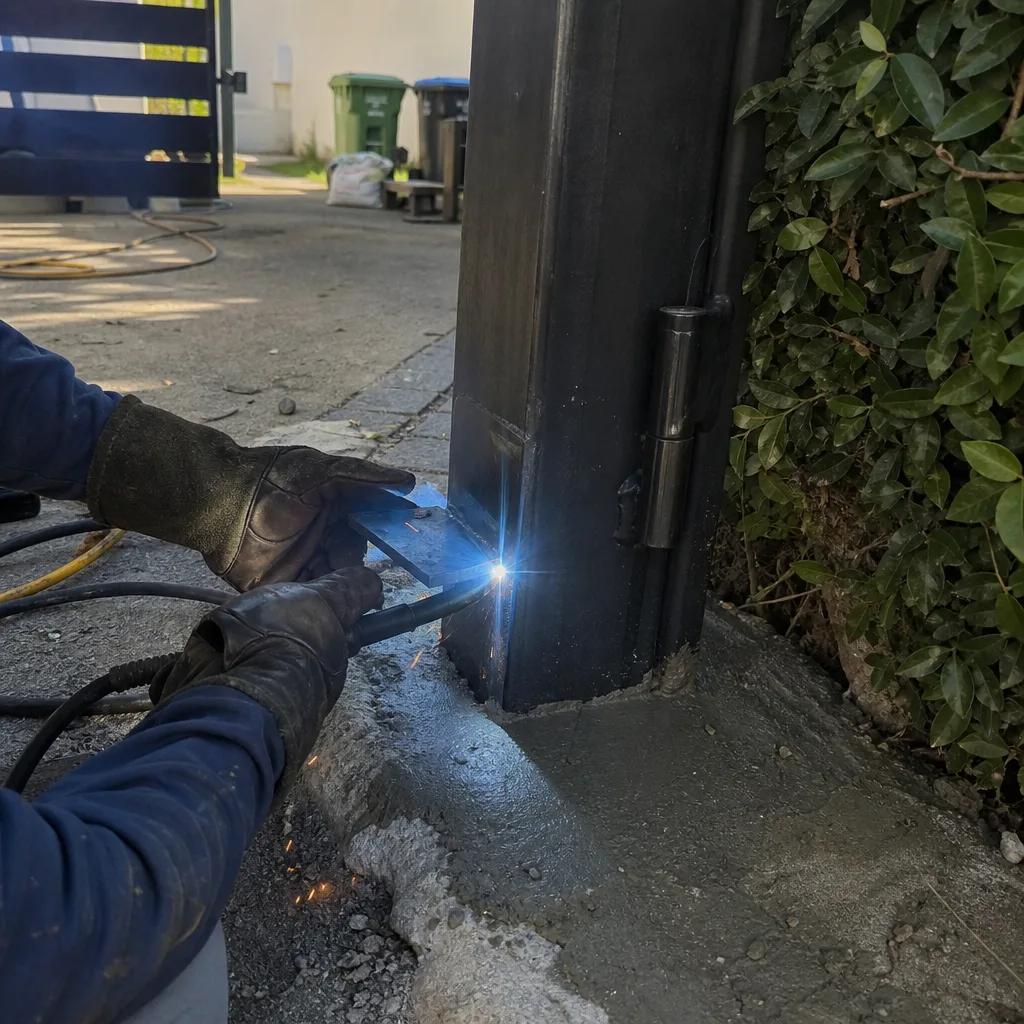
Call a licensed gate technician when the repair touches entrapment protection devices, control board wiring, motor internals, or any part of the gate that, if it failed, could cause injury. That includes photo-eyes, edge sensors, force settings, and any situation where the gate moves when it should not or does not move when it should. For structural work, welding, or changes to the gate’s path of travel, the same rule applies. Vance Gate Repair West Hollywood offers free estimates in West Hollywood. Call (424) 321-7416 and someone answers, any hour, any day.
Frequently Asked Questions
You may perform certain maintenance tasks on your own gate, but replacing a gate operator involves electrical and entrapment-protection work that must meet UL 325 and, in some cases, requires a City of West Hollywood permit. A licensed contractor is the safer path, especially when the existing motor is a FAAC, BFT, or Viking unit with brand-specific wiring. Call (424) 321-7416 for a written estimate before you decide.
UL 325 requires every automated gate to have at least two independent entrapment-protection measures, such as photo-eyes, edge sensors, and the operator’s built-in obstruction detection. It also governs gate speed, closing force, and the placement of controls. A non-compliant installation creates both a safety hazard and an insurance liability gap.
It can, especially if the repair involved modifying or installing entrapment protection devices and the installation does not meet UL 325. An injury claim on a non-compliant gate can be denied, leaving the homeowner personally liable. A licensed contractor’s work shifts that liability and provides documentation the insurer will accept.
Lubricating hinges and rollers, replacing remote batteries, adjusting limit switches within manufacturer specs, cleaning photo-eye lenses, and tightening visible fasteners. These tasks are legal and safe when done within the manufacturer’s documentation, and recording what you did helps any future technician.
Simple repairs like a limit-switch adjustment or photo-eye realignment typically run between $150 and $300 in West Hollywood. Operator replacements range from $930 to $1,400 installed, depending on the motor brand and the gate’s configuration; see our Gate Repair Cost Breakdown: The West Hollywood Homeowner’s Reference for 2026 for full pricing details. The price is written and agreed before work starts. Call (424) 321-7416 for an exact quote, no obligation.
Most gate repairs in West Hollywood are completed in a single visit of 1-3 hours. Operator replacements can take a half day. The technician arrives with the parts on the truck, and the written estimate covers the full scope before any work begins.
We service LiftMaster, FAAC, BFT, Linear, Viking, Ghost Controls, DoorKing, Elite, and Mighty Mule. If a homeowner has a different brand on an existing gate, we assess it on site and advise on repair versus replacement.
For urgent repair situations, same-day service in West Hollywood is available when the technician’s schedule allows, and a live person answers at (424) 321-7416 around the clock to schedule the next available slot.
The Bottom Line
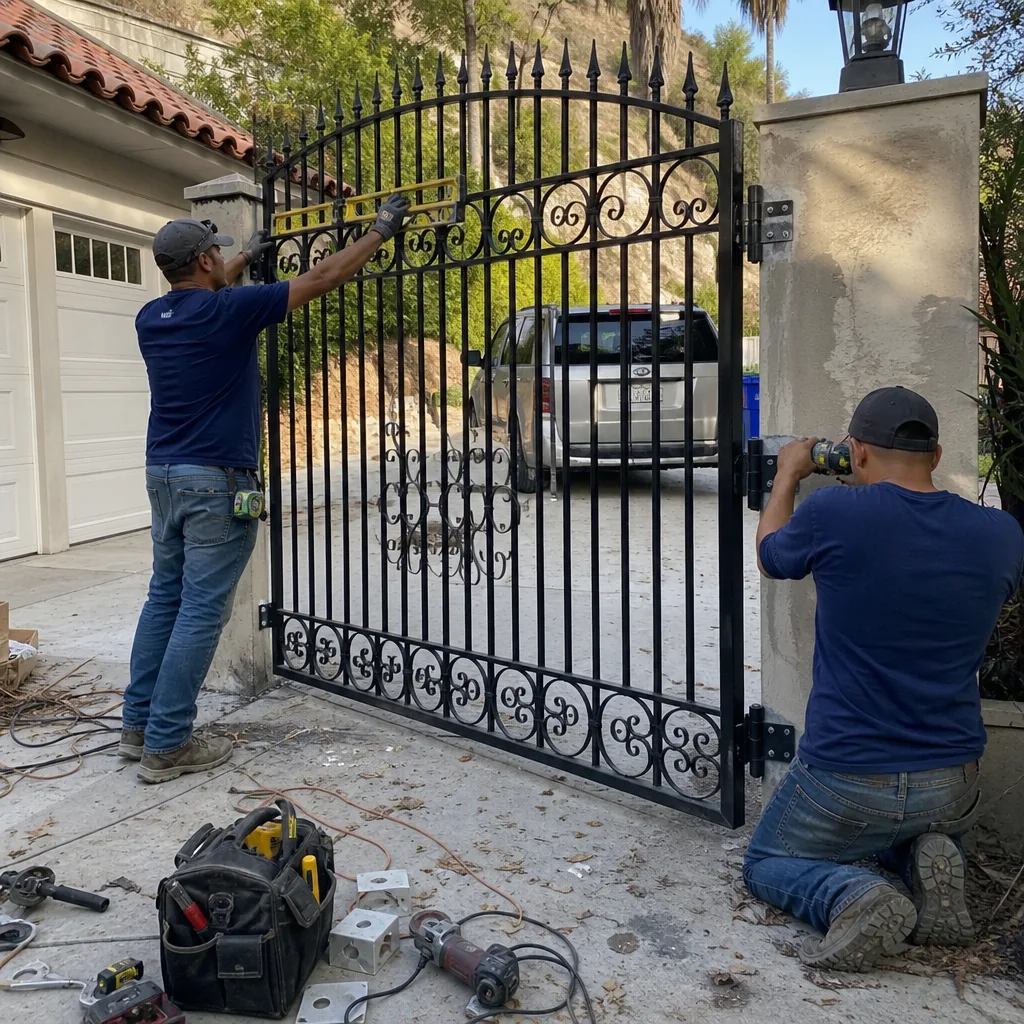
The DIY-versus-pro decision for gate repair in West Hollywood is not a test of mechanical skill; explore our more guides & resources to understand the full picture. It is a question of liability, compliance, and which failures a homeowner is prepared to absorb. The work you may do yourself is limited: lubrication, battery changes, limit adjustments within spec, photo-eye cleaning, fastener checks. The work that requires a professional is more extensive than most homeowners assume: operator replacement, wiring, entrapment devices, and any structural or welding work. California law sets the floor, UL 325 sets the safety standard, and your insurance policy enforces both, usually at claim time, when it is too late to fix the install.
For homeowners who want the gate fixed once, documented, and priced before the work begins, Vance Gate Repair West Hollywood provides Gate Motor & Opener in West Hollywood service with a written scope, a written price, and a photo record on every visit. Call (424) 321-7416 for a free estimate, and a live person answers.
Written by Adrian Vance, Owner at Vance Gate Repair West Hollywood, serving West Hollywood since 2014.